Japanese ramie
Boehmeria nipononivea
Description
Japanese ramie (Boehmeria nipononivea) is a perennial herbaceous plant belonging to the Urticaceae (nettle) family. It is recognized as a significant agricultural crop primarily cultivated for its high-quality bast fiber, which is processed for the textile and manufacturing industries due to its exceptional strength and luster.
The plant is native to East Asia, with a primary distribution range across Japan, China, and Korea. It thrives in warm, humid climates characterized by substantial rainfall and long, frost-free growing seasons. These environmental conditions are essential for maximizing the biomass yield of the plants, which can be harvested multiple times per year.
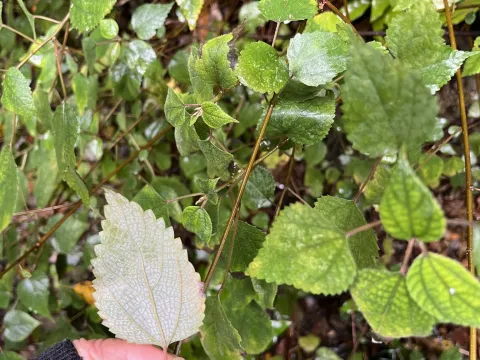
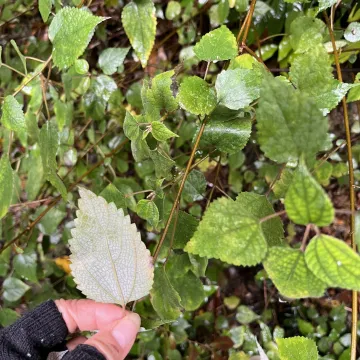
Botanically, Japanese ramie is characterized by its rhizomatous root system, which allows the plant to persist for several years. The stems are straight, rigid, and reach heights of up to two meters. A distinctive feature of the species is the foliage: large, heart-shaped leaves with serrated margins, featuring a pale, white-tomentose underside that gives the plant a characteristic appearance.
Agronomic requirements for this crop focus on fertile, well-draining soils with balanced nitrogen content to support rapid stalk growth. Proper field management, including irrigation and fertilization, is crucial. Because the plant is sensitive to waterlogging, site selection must emphasize adequate drainage to prevent root rot and ensure the longevity of the perennial stands.
The fiber extracted from Boehmeria nipononivea is highly valued for its natural durability, moisture absorption, and resistance to bacteria and mold. It is widely used in the production of high-end fabrics, industrial cordage, and specialty papers. Common agricultural threats include foliage-feeding pests and various soil-borne fungi that may infect the roots if soil moisture levels are not properly managed.
Photo gallery