
Sea club-rush
Bolboschoenus maritimus
Description
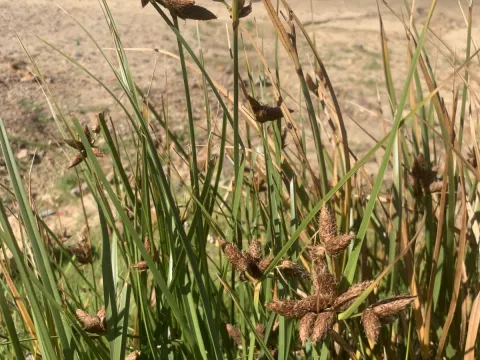
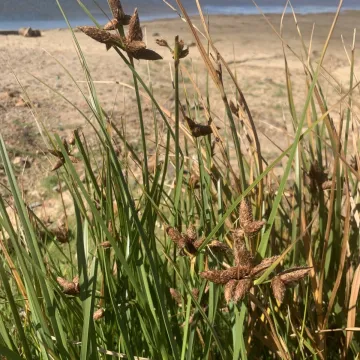
Sea club-rush (Latin Bolboschoenus maritimus) is a perennial herbaceous plant belonging to the Cyperaceae family. While often categorized in agriculture as a persistent weed in rice paddies and wetlands, it possesses distinctive biological characteristics that allow it to thrive in saline and waterlogged environments where few other crops can persist.
The plant is widely distributed across temperate and subtropical regions of the world, including Europe, Africa, Asia, and North America. Its primary habitats include salt marshes, tidal flats, and the edges of brackish or freshwater bodies. This wide range demonstrates the species' exceptional ability to adapt to varying levels of salinity and fluctuating water tables.
Botanically, the plant is characterized by a robust rhizome system that produces distinctive, starch-rich tubers. Its stems are triangular in cross-section and can reach heights of over one meter. The leaves are typically long, linear, and tough, providing the plant with structural integrity against wind and water movement, which is essential for survival in exposed shoreline habitats.
Agronomically, managing this species is critical in controlled aquatic environments. Successful suppression usually involves a combination of mechanical techniques, such as deep plowing to deplete carbohydrate reserves in the tubers, and the strategic use of herbicides. Soil moisture management is also a key factor, as the species relies on specific hydrological regimes to dominate.
Economic uses for Sea club-rush include its potential as a source of biomass for renewable energy or raw material for traditional handicrafts. In some pastoral systems, the tubers have historically served as supplemental feed for livestock due to their high energy content. Research into its salinity tolerance also makes it a subject of interest for ecological restoration projects.
- High salt tolerance (halophytic nature)
- Effective vegetative reproduction via tubers
- Strong tolerance to prolonged inundation
- High starch concentration in rhizomes
The plant is susceptible to various fungal pathogens, such as rusts and smuts, which can significantly impact its biomass accumulation. Common pests include larvae of specialized insects that bore into the stem or consume the energy-rich tubers, acting as natural checks on the population density within its native ecosystem.
Photo gallery