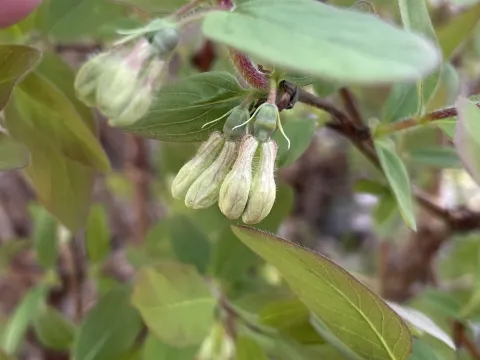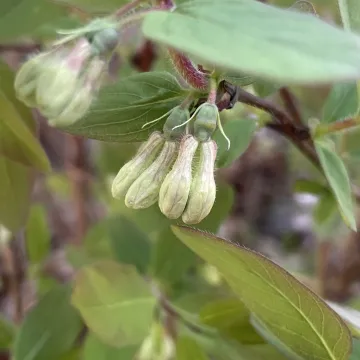
Pallas honeysuckle
Lonicera caerulea L. var. edulis Turcz. ex Herder
Description
Pallas honeysuckle (Lonicera caerulea L. var. edulis) is a highly valued edible berry shrub belonging to the Caprifoliaceae family. Known for its exceptional cold hardiness and early ripening cycle, this shrub has become a favorite among berry growers looking for reliable crops that thrive in difficult environments. It serves both as a functional orchard plant and an ornamental feature in landscape design.
The native range of this plant extends across Eastern Siberia, the Russian Far East, Mongolia, and parts of East Asia. Growing naturally in river valleys and forest edges, it has evolved to withstand harsh winters and variable spring temperatures. This evolutionary background makes it an excellent choice for northern gardens where other small fruit bushes might struggle.
Botanically, Pallas honeysuckle is characterized by its hardy woody stems and unique elongated blue-violet berries covered with a waxy bloom. The plant is a slow grower in its early stages but can reach a mature height of approximately 1.5 to 2 meters. It is long-lived, often producing fruit consistently for over two decades when provided with suitable growing conditions.
To cultivate successfully, it is essential to plant the shrubs in well-drained, fertile soil with a slightly acidic to neutral pH. While the bushes are tolerant of various conditions, they perform best in full sun or light shade. Watering should be consistent during the fruit development stage, and pruning is necessary to remove dead wood and encourage airflow throughout the dense canopy.
The culinary and health-related uses for Pallas honeysuckle are vast. The berries are prized for their high concentrations of anthocyanins and vitamin C, making them a superfood addition to jams, juices, and fresh salads. Common pests include aphids and mites, which can be managed through natural predators or organic sprays, while maintaining overall plant health is the best defense against fungal infections.
- Requires cross-pollination; ensure at least two different varieties are planted nearby.
- Plants are extremely winter-hardy, surviving temperatures well below freezing.
- Maintenance is minimal, focusing on annual pruning to improve yield.
Photo gallery