Trumpet honeysuckle
Lonicera sempervirens L.
Description
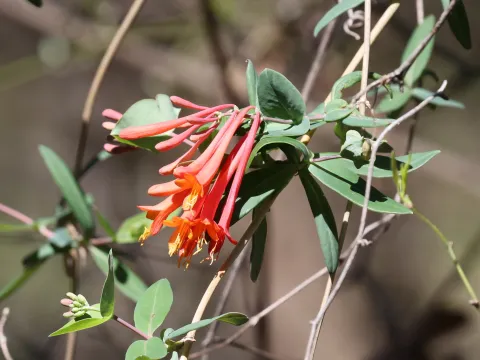
Trumpet honeysuckle (lat. Lonicera sempervirens) is a vigorous perennial vine belonging to the Caprifoliaceae family. Unlike edible honeysuckle varieties, this species is primarily cultivated for its exceptional ornamental value, serving as a staple in ornamental horticulture and vertical landscaping.
Native to the southeastern regions of North America, this plant is well-adapted to varied temperate climates. It has gained widespread popularity among gardeners for its resilience and ability to thrive in diverse environmental conditions, provided that basic sunlight and soil requirements are met.
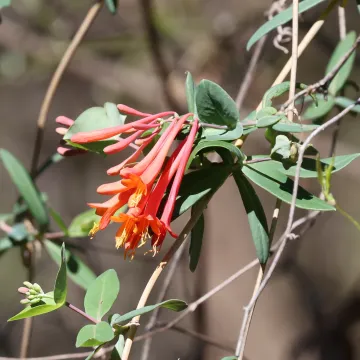
Botanically, it is a twining vine that can reach heights of up to 6 meters. Its foliage is semi-evergreen, featuring smooth, elliptical, dark green leaves. The plant is most distinguished by its striking, tubular flowers that appear in clusters, showcasing vibrant shades of red and orange, which are highly attractive to hummingbirds and bees.
The cultivation of Lonicera sempervirens requires specific attention to its growing environment:
- Full sun is preferred for maximum flowering potential.
- Well-draining, moderately fertile soil is essential for root health.
- Regular irrigation is necessary during dry spells to prevent wilting.
- Strategic pruning is required to manage its climbing habit and stimulate growth.
The main use of this culture is decorative, providing cover for trellises, fences, and walls. While robust, the plant can be susceptible to common pests such as aphids or diseases like powdery mildew. Integrated pest management, including regular inspection and the use of appropriate horticultural treatments, is recommended to ensure the plant remains healthy and vigorous.
Photo gallery