Russian reedgrass
Calamagrostis pseudophragmites
Description
Russian reedgrass (lat. Calamagrostis pseudophragmites) is a perennial grass species belonging to the Poaceae family. This rhizomatous grass is highly valued for its robust growth habit and ability to thrive in demanding environments, making it an essential plant for ecological engineering and habitat restoration projects.
The species is native to temperate regions across Eurasia. It naturally inhabits riverbanks, floodplains, and gravelly deposits. Its natural range demonstrates a preference for habitats that are subject to moisture fluctuations, allowing it to colonize challenging sites where soil stability is a concern.
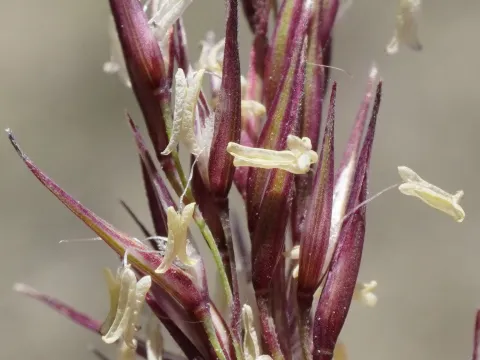
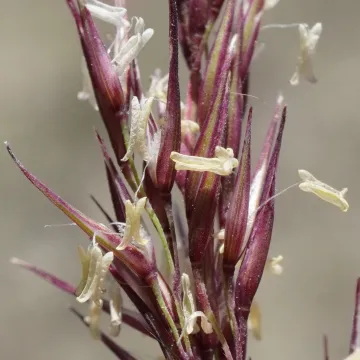
Botanically, the plant features erect culms that can reach a height of 50 to 150 cm. Its leaves are narrow, rigid, and tapered. The inflorescence is a dense, often plume-like panicle, typically displaying silvery or purple hues during the flowering phase. The root system is deep and expansive, forming a dense sod that effectively anchors the plant in loose substrates.
Regarding cultivation, Russian reedgrass prefers moist, sandy, or silty soils with a neutral pH. While it is tolerant of various soil textures, adequate moisture is critical during the establishment phase. Propagation is most efficient through rhizome division in early spring, ensuring quick colonization of the targeted area.
- Excellent soil stabilizer for embankments.
- High tolerance to occasional flooding.
- Valuable for phytoremediation and bio-filtration.
- Provides habitat for various aquatic and terrestrial fauna.
The main commercial and utility application of this grass is erosion control. It is extensively used to reinforce riverbanks, roadside slopes, and artificial water features. Beyond its protective role, it serves as a decorative element in naturalistic garden designs, specifically in rain gardens and buffer zones around ponds.
Disease pressure, such as rust fungi or powdery mildew, can occur in poorly ventilated areas with excessive humidity. Management involves maintaining appropriate planting density and monitoring for common grass pests like aphids or thrips. Proper site preparation and control of invasive weed competition are vital for a successful plantation of this hardy species.
Photo gallery