Hairy small-reed
Calamagrostis villosa
Description
Hairy small-reed (Calamagrostis villosa) is a perennial grass species belonging to the family Poaceae. In agricultural practice, this grass is recognized for its robust nature and its role in maintaining biodiversity within alpine and subalpine meadows, where it thrives despite challenging environmental conditions.
Originating in the mountainous regions of Europe, this plant is well-adapted to cool, humid climates. It has a significant presence in diverse habitats, successfully colonizing acidic and nutrient-poor soils. Its natural ability to withstand harsh winters and variable moisture levels makes it a resilient choice for ecological restoration.
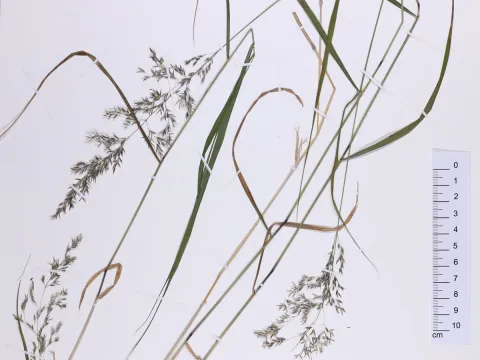
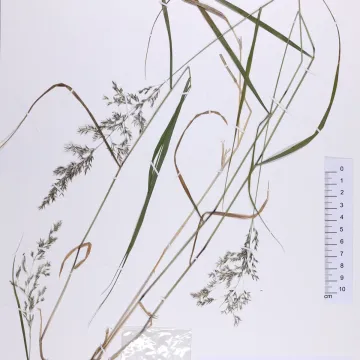
Botanically, Calamagrostis villosa is characterized by a creeping rhizomatous root system, which allows for aggressive spreading. Its stems are upright, reaching heights of 100–120 cm, complemented by narrow, serrated leaves and a characteristic loose panicle inflorescence that matures during the summer months.
- Requires minimal chemical inputs due to high natural resistance.
- Thrives in partial shade and cooler temperatures.
- Acts as an effective ground cover for soil erosion prevention.
Agricultural utility focuses primarily on pasture management and hay production, although its feed value is highest when harvested prior to full maturity. Due to its growth habit, it is often utilized in marginal land management, helping to stabilize disturbed slopes where intensive farming is not feasible.
Regarding health management, the plant is generally hardy, though it may be susceptible to fungal infections like rust or ergot if humidity levels remain high for extended periods. Common insect pests include grain aphids and various stem-boring beetles that can impact seed production if not monitored correctly.
Photo gallery