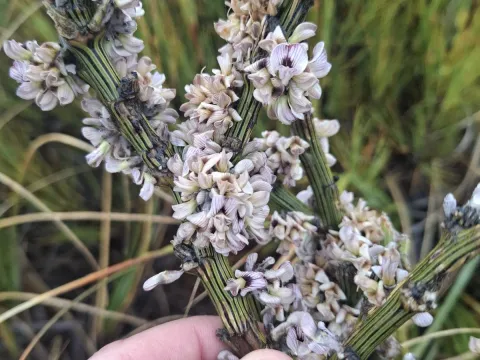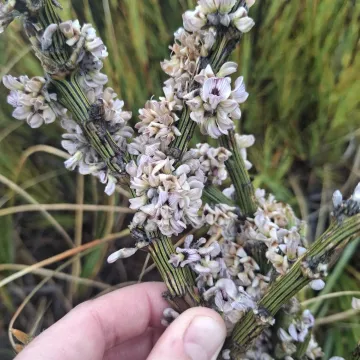
Carmichaelia crassicaulis
Carmichaelia crassicaulis
Description
Carmichaelia crassicaulis is a distinctive species of shrub belonging to the Fabaceae family. Recognized for its unique appearance, this plant has adapted to survive in harsh mountainous environments. It is a classic example of a leafless shrub, where the stems have evolved to perform photosynthesis, providing a highly efficient survival strategy for arid and windy conditions.
The plant originates from the subalpine regions of the South Island of New Zealand. In its native habitat, it typically grows on rocky slopes and in mountainous terrains. These areas are characterized by poor, well-draining soil and a climate with significant temperature fluctuations, which the plant withstands due to its specialized physiological structure.
Botanically, the species is defined by its thick, fleshy stems that are essentially leafless for most of the year. During the flowering season, it produces small, fragrant, and typically pea-like flowers. After pollination, the plant produces seeds within small, persistent pods, allowing it to propagate naturally even in difficult, stony substrates.
In cultivation, the primary requirement for successful growth is excellent drainage. Whether grown in a greenhouse or an outdoor rockery, the soil must be porous and rocky to prevent root rot. It requires full sunlight to maintain its structural integrity and health. The plant is drought-tolerant, meaning overwatering is the most common cause of failure, so supplemental watering should only be provided during extreme drought.
- Requires full sun exposure for optimal stem development.
- Thrives in lean, well-draining, stony or sandy soil types.
- Avoid overwatering to prevent root and stem rot.
- Maintains a slow growth rate, making it suitable for long-term container or rock garden growth.
Its primary use is ornamental, particularly in collections of alpine plants or xeric landscapes. While not a conventional agricultural crop, it is valued by horticulturalists for its extreme hardiness and aesthetic uniqueness. Pests and diseases are generally minimal, provided that the moisture levels are carefully managed, as the plant is highly resistant to standard pathogens when kept in dry conditions.
Photo gallery