Carmichaelia petriei
Carmichaelia petriei
Description
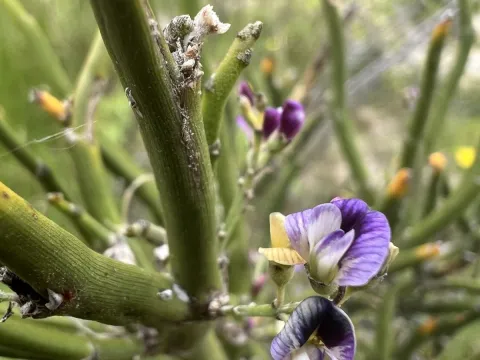
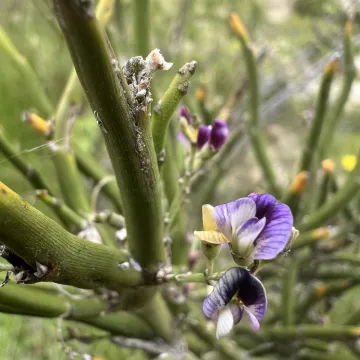
Carmichaelia petriei is a distinctive perennial shrub belonging to the Fabaceae family. Commonly known as a type of New Zealand broom, this plant is evolutionary adapted to high-altitude environments. Its most striking botanical feature is the reduction of leaves, with the stems performing the majority of photosynthesis, which minimizes water loss in exposed, windy locations.
The plant is native to the South Island of New Zealand. Its natural habitat includes rocky riverbeds, mountain slopes, and open shrublands. It has evolved to thrive in poor, stony soils and can endure wide temperature fluctuations, making it a robust species suited for harsh environments. Its distribution is limited to regions that mirror its native climatic conditions.
From a botanical perspective, the plant architecture is characterized by rigid, green, often flattened stems that provide structural integrity. During the flowering season, it produces clusters of small, fragrant, pea-like flowers, typically colored in shades of white or lavender with darker veins. These are followed by small, persistent pods that add unique texture to the plant throughout the late season.
The horticultural requirements for Carmichaelia petriei are centered on mimicking its wild environment. Key aspects include:
- Well-draining, stony, or sandy soil to prevent root rot.
- Full sun exposure is essential for maintaining plant health and encouraging flower development.
- Moderate watering, with a focus on avoiding waterlogged conditions during the dormant winter months.
In terms of usage, the plant is highly valued by ornamental gardeners for its architectural form, making it a perfect candidate for rock gardens and xeriscaping. It is generally resistant to most common pests, although poor soil drainage can lead to root pathogens. By ensuring proper site selection and minimal disturbance to the root system, gardeners can successfully maintain this unique specimen as a long-term feature of the landscape.
Photo gallery