Cattley guava
Psidium cattleianum Sabine
Description
The Cattley guava (scientific name Psidium cattleianum) is a small evergreen tree or shrub belonging to the Myrtaceae family. Widely recognized for its adaptability, this plant is native to the coastal forests of Brazil. Over the years, it has been introduced to various subtropical and tropical regions globally, where it is often referred to as the strawberry guava due to the characteristic flavor profile of its fruit.
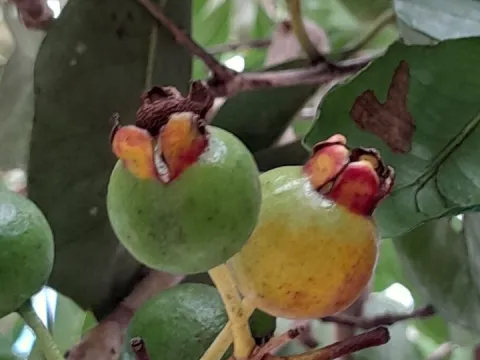
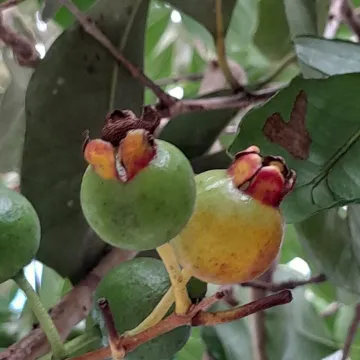
Botanically, the plant is characterized by its glossy, leathery leaves and compact growth habit, making it an excellent candidate for both ornamental use and fruit production. The flowers are small, white, and fragrant, typically appearing in clusters. The fruits are small, spherical, and possess a thin skin that changes from green to deep purple or bright yellow upon maturity. The flesh is translucent, sweet, and tangy, often compared to a blend of strawberry and guava.
Regarding climate and soil requirements, the Cattley guava thrives in subtropical conditions with well-distributed rainfall. It is notably more cold-hardy than the common guava (Psidium guajava), tolerating temperatures slightly below freezing for short periods. The species prefers rich, acidic to neutral soils with excellent drainage. Exposure to full sunlight is critical for maximizing fruit production and maintaining the density of the foliage.
Agricultural management requires consistent irrigation during the fruit-set phase and periodic pruning. Pruning is essential not only to shape the tree but also to remove dead or overlapping branches, which promotes better air circulation and reduces the risk of fungal infections. Fertilization should be balanced, focusing on nitrogen during the early growth stage and supplementing with potassium and phosphorus during the reproductive phase.
The economic and culinary utility of the Cattley guava is high. The fruits are consumed fresh or utilized in the production of jellies, juices, and various preserves. Beyond culinary use, the tree is prized in xeriscaping and container gardening for its hardiness and aesthetic appeal. Common pests that growers should monitor include scales, whiteflies, and fruit flies, while root rot can occur if soil drainage is inadequate.
Photo gallery