Rabbitbrush
Chrysothamnus nauseosus
Description
Rabbitbrush (Chrysothamnus nauseosus) is a perennial shrub belonging to the Asteraceae family. Historically recognized in ecology, it has recently gained attention as a potential industrial crop, specifically for its capacity to produce natural rubber and resins, positioning it as a viable candidate for sustainable bio-polymer production.
The plant is native to the arid and semi-arid regions of Western North America. Its geographical range spans from desert scrublands to montane environments, demonstrating a remarkable resilience to diverse soil types and extreme climatic conditions. This natural adaptation makes it a robust choice for cultivation in marginal lands that are unsuitable for traditional crops.
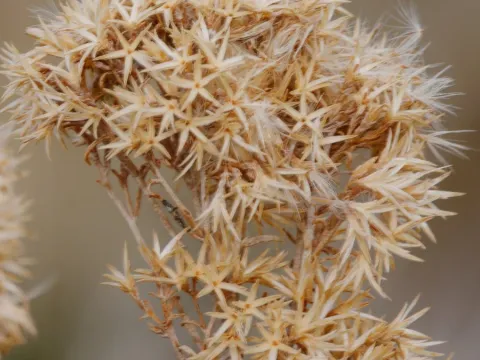
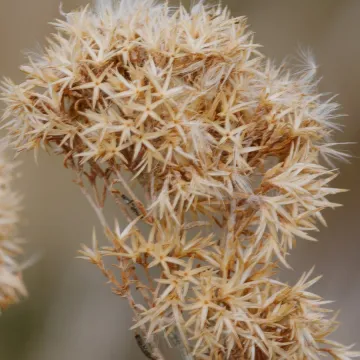
Botanically, Rabbitbrush is characterized by its woody base and dense, rounded canopy of slender, grey-green leaves covered in fine hairs. It reaches heights of up to 1.5 meters. The inflorescences consist of clustered, bright yellow disc flowers that appear in late summer, providing a distinct biological signature that aids in identification and provides forage for pollinators.
In terms of agronomy, the crop thrives in well-drained, alkaline, or sandy soils. It requires full sunlight and is exceptionally drought-tolerant once established. Cultivation practices emphasize minimal irrigation and the avoidance of excessive nitrogen fertilization, which can suppress the plant's natural resin production. Proper spacing is essential to ensure adequate airflow and prevent moisture-related issues.
The primary economic value lies in its latex content, which can be harvested and processed into industrial-grade rubber. Beyond this, the plant is utilized for erosion control in arid landscapes due to its deep root system. Common pests include aphid infestations during the growing season, while fungal pathogens are generally restricted to environments where poor drainage or stagnant water conditions persist.
Photo gallery