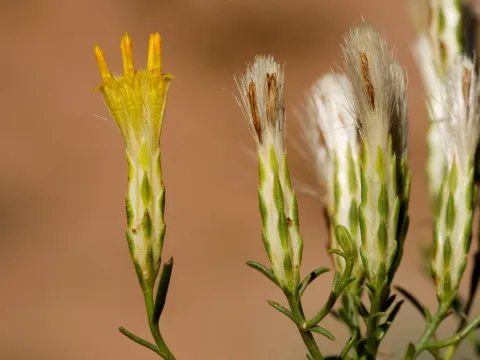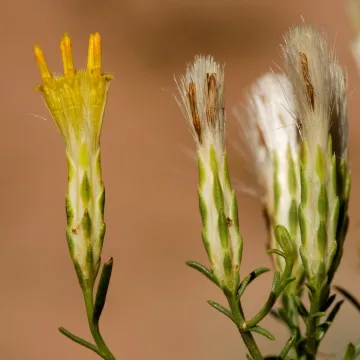
Chrysothamnus pulchellus
Chrysothamnus pulchellus
Description
Chrysothamnus pulchellus is a perennial subshrub belonging to the Asteraceae family. This species is widely recognized for its high tolerance to arid environments and serves as an important component of desert ecosystems. While it is not a traditional agricultural crop in the commercial sense, it is gaining significance in restoration ecology and xeriscaping due to its remarkable resilience.
The natural range of this plant is confined to the arid southwestern regions of North America, including parts of the United States and Mexico. It primarily inhabits open, high-light areas characterized by sandy, gravelly, or saline soils. The species has adapted to extreme thermal fluctuations, thriving in environments where moisture is sparse and soil nutrients are minimal.
Botanically, the plant is characterized by a dense, branching growth habit and narrow, often pubescent or leathery leaves that effectively reduce water loss. The plant flowers in late summer, producing an abundance of bright yellow flower heads that attract various pollinators. A deep taproot system is a signature feature, enabling the plant to access groundwater deep within the soil profile.
Agrotechnical requirements for Chrysothamnus pulchellus are focused on mimicking its natural habitat. It necessitates excellent drainage to prevent root suffocation and disease. Cultivation is relatively simple: minimal irrigation is required only during the establishment phase, and maintenance typically involves only minor pruning to manage the shape of the shrub and remove dead branches.
The primary economic use of this culture involves soil stabilization projects to prevent erosion on arid slopes and land reclamation efforts. Despite its hardiness, growers should remain vigilant regarding plant health. Typical issues include:
- Fungal pathogens triggered by inadequate drainage or waterlogged soil conditions.
- Infestations of leaf-eating insects that can affect foliage density during peak growth.
- Root-knot nematodes, which can be problematic in specific soil types if the plants are stressed.
Photo gallery