Yellow rabbitbrush
Chrysothamnus viscidiflorus
Description
Yellow rabbitbrush (Chrysothamnus viscidiflorus) is a long-lived deciduous shrub belonging to the Asteraceae family. It is widely recognized for its ecological importance in the arid and semi-arid regions of North America, where it thrives in harsh environments that exclude many other plant species.
The plant is native to the western United States, typically found in sagebrush steppe ecosystems, mountain foothills, and high desert plains. It possesses a high degree of phenotypic plasticity, allowing it to colonize diverse environments, from well-drained rocky slopes to deep sandy soils in desert valleys.
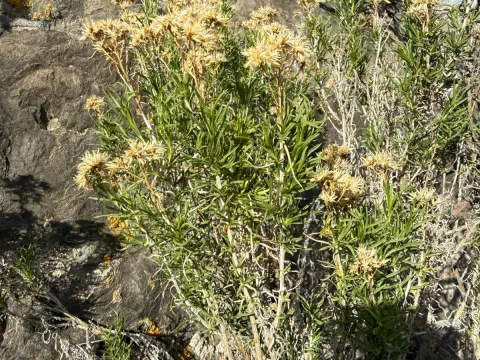
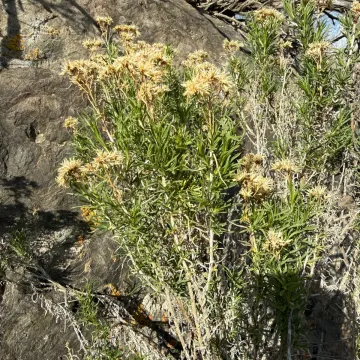
Botanically, it is identified by its upright, woody stems and narrow, linear leaves often covered in a viscid (sticky) resin that aids in water retention. The plant displays dense clusters of bright yellow flower heads in late summer and autumn, providing a significant nectar source for pollinators when other late-season forage is scarce.
In terms of agricultural management, the species requires minimal input. It is exceptionally drought-tolerant and thrives in soils with low fertility, provided there is excellent drainage. Over-irrigation is the primary cause of plant failure, as root rot can develop quickly in poorly aerated or waterlogged substrate conditions.
Economic and practical applications for Chrysothamnus viscidiflorus focus on ecological restoration and xeriscaping. Due to its deep root system, it is frequently used to stabilize disturbed soils and prevent wind and water erosion in rangeland management. While it contains secondary metabolites that make it less palatable for livestock compared to other forages, it provides essential habitat and seasonal food for native wildlife species.
- Superior drought and cold tolerance.
- Key species for erosion control and slope stabilization.
- Valuable late-season nectar source for insects.
- Well-suited for low-maintenance xeriscaping projects.
Photo gallery