
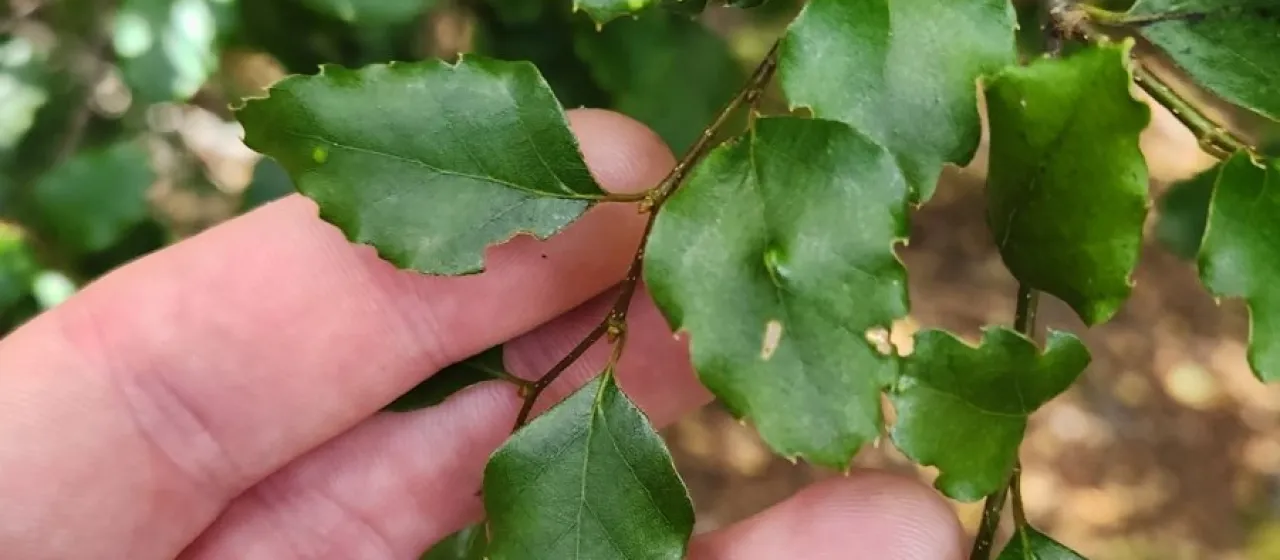
Description
Clinker beech (Nothofagus fusca) is an evergreen tree belonging to the Nothofagaceae family. It is one of the most significant forest trees in New Zealand, renowned for its ecological importance and aesthetic appeal. The species is highly valued in botanical gardens and forestry projects for its rapid growth and elegant form.
Native to New Zealand, this tree thrives in temperate rainforest conditions, extending its range across various altitudes on both the North and South Islands. Its natural habitat is characterized by high humidity and consistent rainfall, which are crucial for the development of its dense, evergreen foliage. It forms the backbone of many native temperate forests.
The botanical characteristics of Nothofagus fusca include small, serrated leaves and a robust trunk that can grow to impressive heights. It is monoecious, producing separate male and female flowers on the same plant. The fruit is a small, woody cupule containing nuts, which serves as a food source for various native wildlife species.
In terms of agricultural and forestry management, Clinker beech requires deep, well-drained, and nutrient-rich soils. It prefers cool to moderate climates and is sensitive to prolonged frost or extreme drought. Proper site selection is vital; it performs best in sheltered locations where the soil moisture remains relatively constant throughout the year.
The timber of the Clinker beech is highly prized for its durability, attractive reddish-brown color, and fine grain. It is commonly used in furniture manufacturing, high-end cabinet making, and specialized construction. While generally robust, the trees can be affected by pests such as scale insects or specific fungal infections if stressed by poor soil conditions or inadequate water.