Broom creeper
Cocculus hirsutus
Description
Broom creeper (Cocculus hirsutus) is a perennial climbing shrub belonging to the family Menispermaceae. It is characterized by its twining stems and dense foliage, often forming large, tangled mats over host plants or rock formations in its natural habitat.
The plant is native to tropical and subtropical regions of Africa and Asia, particularly thriving in India and neighboring countries. It is highly adapted to arid and semi-arid environments, often found in scrublands, dry deciduous forests, and waste areas where it demonstrates remarkable resilience to environmental stress.
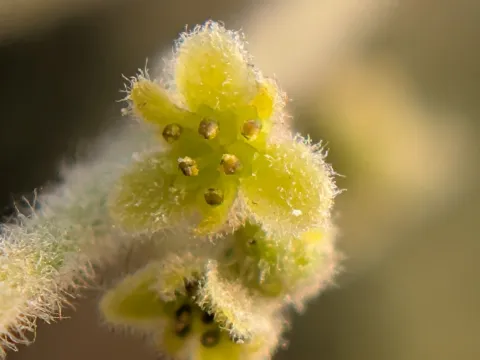
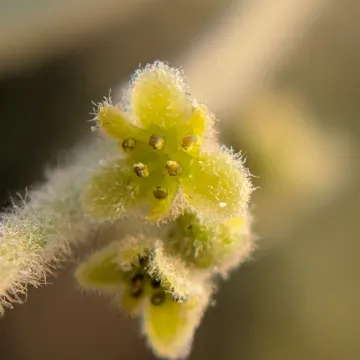
Botanically, it is identified by its broadly ovate or cordate leaves, which are covered in soft, white, villous hairs. The flowers are small, dioecious, and greenish-yellow, developing into small, dark, succulent drupes. The entire plant structure is designed to maximize photosynthesis while minimizing water loss through its hairy surface texture.
In terms of agricultural management, Cocculus hirsutus requires minimal intervention once established. It thrives in well-drained soil and requires full sun exposure. While not a conventional commercial crop, it is cultivated in medicinal gardens. Cultivation practices include regular pruning to maintain manageable growth and providing sturdy trellis systems to support its aggressive climbing habit.
Economically and medicinally, the plant is valued for its pharmacological properties, including antioxidant and anti-inflammatory activity. Various parts of the plant are used in traditional medicine systems to treat rheumatic pain and skin disorders. Common pests include aphids and mites, which can be managed through integrated pest control methods, though the plant is generally hardy.
- Excellent drought tolerance.
- Rapid vegetative growth.
- Medicinal alkaloids in leaves and roots.
- Requires trellis or vertical support.
Photo gallery