Laurel-leaf snailseed
Cocculus laurifolius
Description
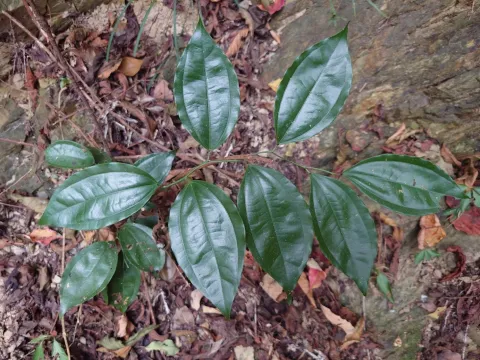
Laurel-leaf snailseed (Cocculus laurifolius) is an evergreen shrub or small tree belonging to the Menispermaceae family. Renowned for its lustrous, deep green foliage that retains its color throughout the seasons, this plant is a staple in many ornamental gardens across subtropical regions, valued for its elegant structural presence.
The species is native to tropical and subtropical areas of Asia, including the Himalayan regions, China, and Japan. In its natural habitat, it thrives in forest margins and river valleys, preferring environments with consistent moisture and protection from harsh elements. Due to its adaptation to mild climates, it has been successfully introduced into cultivation in various warm-temperate zones globally.
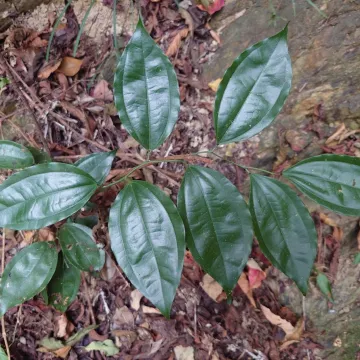
Botanically, the plant is characterized by its lance-shaped leaves which bear a striking resemblance to those of the true laurel, marked by distinct longitudinal veins. It exhibits a naturally graceful, spreading growth habit. The flowers are small and often inconspicuous, produced in axillary racemes, eventually developing into small, dark-colored drupes that contain the seeds.
Agricultural requirements for Cocculus laurifolius include deep, well-drained, and nutrient-rich soil. While it can adapt to various light conditions, it performs best in partial shade, where the foliage can maintain its optimal sheen without the risk of sun-scorch. Regular irrigation is necessary, particularly during the establishment phase and prolonged dry spells, to prevent stress and fungal development.
In terms of land use, the plant is extensively used in landscape architecture for privacy screens, hedging, and specimen planting. Its ability to tolerate pruning makes it an excellent choice for formal gardens. While not a primary agricultural commodity in terms of food production, it holds minor historical significance in traditional botanical preparations, requiring careful handling due to the presence of alkaloids in various plant parts.
- Regular pruning to maintain shape and density.
- Application of balanced fertilizers during the active growing season.
- Consistent monitoring for common pests like scale insects and mealybugs.
- Mulching around the base to stabilize soil temperature and moisture.
Photo gallery