Icelandic scurvygrass
Cochlearia islandica
Description
Icelandic scurvygrass (Cochlearia islandica) is a herbaceous perennial belonging to the Brassicaceae family. It is a highly resilient plant, specifically adapted to thrive in the harsh, chilly climates of the North Atlantic and arctic regions, making it a unique botanical specimen among agricultural crops.
Originating from the northern latitudes, particularly Iceland and coastal Scandinavia, this plant has evolved to withstand high salinity, strong winds, and cold temperatures. It typically thrives in coastal habitats, rocky crevices, and moist meadows, which defines its preference for high-moisture environments and specific soil mineral profiles.
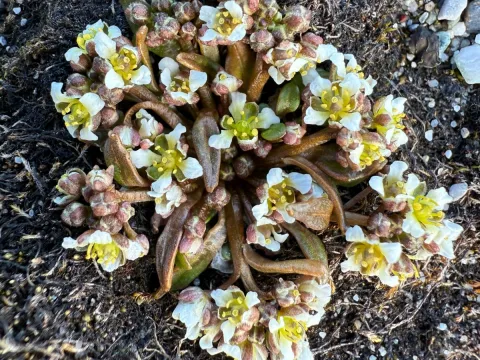
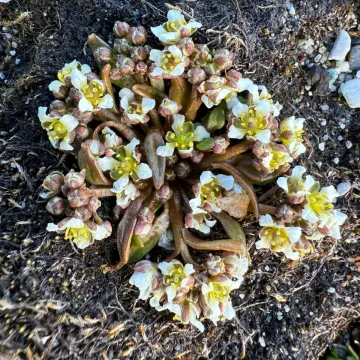
Botanically, the plant is distinguished by its succulent, spoon-shaped leaves arranged in a basal rosette. It features small white flowers with four petals, typical of the cabbage family. The root system is relatively shallow yet robust, designed to absorb nutrients efficiently from thin, rocky soils that characterize its natural habitat.
The agronomic requirements for cultivating Cochlearia islandica focus primarily on moisture management and temperature control. It is a cool-season crop that struggles in intense heat. Soils should be well-drained but kept consistently moist, with a neutral to slightly alkaline pH. Protecting the plant from direct, scorching sun during the peak of summer is essential for maintaining leaf quality.
Historically and commercially, this plant is valued for its high Vitamin C content and pungent, peppery flavor, similar to horseradish. While not a large-scale commercial crop, it is grown for specialized herb markets. Typical pests and diseases include:
- Flea beetles, which are common across the Brassicaceae family.
- Aphid infestations during the flowering stage.
- Root rot pathogens, which can occur if the soil lacks sufficient drainage.
Photo gallery