Scurvy-grass
Cochlearia officinalis
Description
Scurvy-grass (Latin: Cochlearia officinalis) is a hardy perennial herb belonging to the Brassicaceae family. Historically celebrated as a vital source of vitamin C for sailors, it has gained recognition as a specialty leafy green in modern agriculture. The plant is characterized by its distinctively pungent flavor, often compared to horseradish, which makes it a unique addition to culinary gardens.
Originally native to the coastal regions of Europe and the Arctic, Scurvy-grass is naturally adapted to cool, moist environments. It thrives in soils that are rich in organic matter and slightly saline. In agricultural settings, it is best suited for temperate climates, where it can be grown in partially shaded areas to protect the foliage from intense heat and direct summer sun.
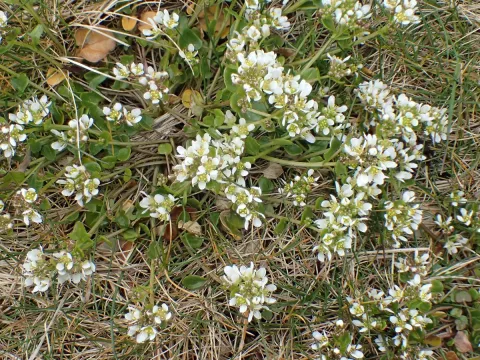
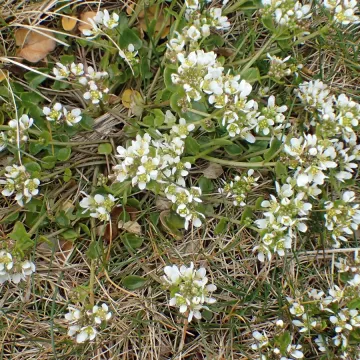
The botanical structure of the plant features a basal rosette of fleshy, spoon-shaped leaves, from which the common name is derived. During the late spring, it produces clusters of small, white flowers on slender stalks. The root system is relatively shallow, which dictates the need for consistent moisture management to prevent the plant from wilting during warmer periods.
Regarding agronomic requirements, Scurvy-grass prefers loamy or sandy soils with a neutral pH. It is an excellent candidate for moisture-retentive garden beds. Cultural practices should include regular weeding, as the plant can be sensitive to competition from vigorous weeds. Since it is a perennial, providing a light mulch during winter can help protect the root crowns in areas with severe frost.
While generally robust, Scurvy-grass can be susceptible to common brassica pests. The most frequent challenges include flea beetles, which create small holes in the leaves, and slugs that feed on the succulent foliage. Monitoring and the application of organic pest control methods are essential for maintaining crop health. When harvested, the leaves are used fresh for salads, seasonings, or as herbal supplements due to their mineral and vitamin density.
Photo gallery