Pyrenean scurvygrass
Cochlearia pyrenaica
Description
Pyrenean scurvygrass (Cochlearia pyrenaica) is a perennial herbaceous plant belonging to the Brassicaceae family. Historically utilized for its high vitamin C content, this crop is valued in specialized horticulture for its pungent, mustard-like flavor and its ability to provide fresh greens very early in the gardening season.
The native range of this species is centered in the mountain regions of Western Europe, particularly the Pyrenees. Agronomically, it is classified as a cold-hardy, moisture-loving crop that thrives in regions with consistent rainfall and high humidity. It is typically found in habitats near streams or in damp, shaded forest fringes.
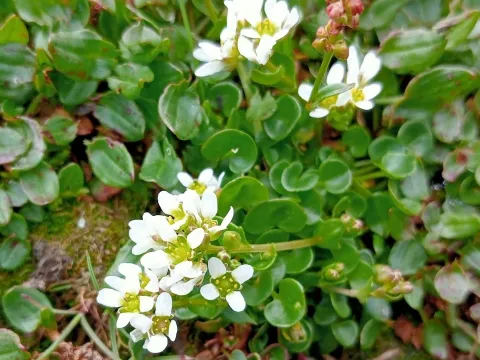
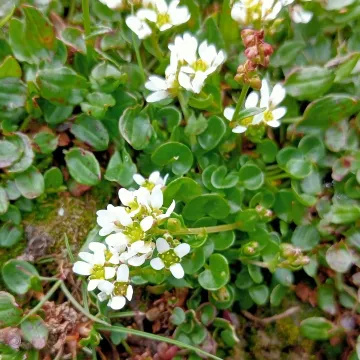
Botanically, the plant forms a compact basal rosette of heart-shaped or roundish leaves with long petioles. In late spring, it produces branching stems topped with small white flowers. The plant is well-adapted to cooler climates and possesses a physiological resilience to late spring frosts, which distinguishes it from many heat-loving commercial greens.
Successful cultivation requires soil that is rich in organic matter and maintains constant moisture throughout the growing season. The plant performs best in neutral to slightly acidic soils. Key agronomic practices include consistent irrigation, the application of light organic mulch to maintain soil coolness, and manual weed control due to the shallow root system of the crop.
In terms of usage, the leaves are harvested for culinary purposes, used to enhance the flavor of salads and spicy dressings. Phytosanitary management is essential, as the plant is susceptible to flea beetles, a common pest for all Brassicaceae. Prevention strategies involve ensuring proper spacing to allow air circulation, which helps reduce the risk of fungal leaf spots and mildew.
Photo gallery