Commicarpus scandens
Commicarpus scandens
Description
Commicarpus scandens, commonly known as the trailing commicarpus, is a perennial herbaceous plant belonging to the Nyctaginaceae family. This species is recognized for its unique scandent growth habit, which necessitates careful management in agricultural and landscaping settings to ensure optimal development.
The plant originates from tropical and subtropical regions of the Americas and Africa. It naturally thrives in diverse environments, ranging from coastal scrublands to arid mountainous slopes. Due to its evolutionary background, the plant displays a remarkable resilience to heat and varying moisture conditions, making it a viable candidate for specific tropical agricultural systems.
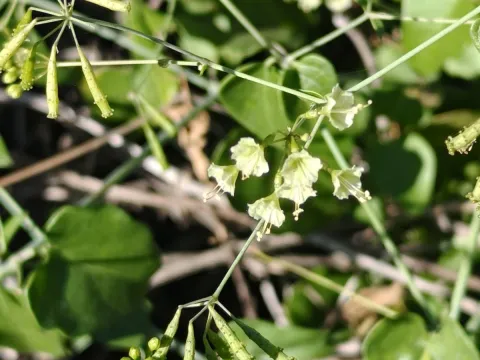
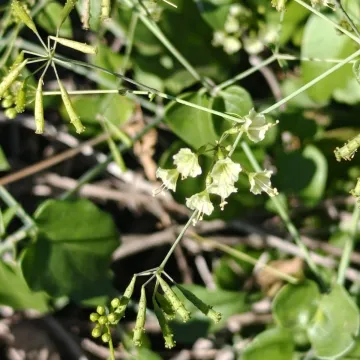
Botanically, it is defined by its slender, elongated stems that can climb when given adequate support. Its leaves are typically cordate or ovate, providing dense foliage that can cover structures. The flowers are small and arranged in umbrella-like clusters, while the fruit features sticky glands that adhere to various surfaces, facilitating seed dispersal in its native habitat.
Agronomic requirements include well-drained, fertile soil with a neutral to slightly alkaline pH. Proper sunlight exposure is crucial, as the plant demands significant light levels for vigorous growth. Irrigation management is essential; while it is drought-tolerant once established, young plants require consistent moisture to develop a strong root system and reach full potential.
- Propagation through seeds or softwood cuttings.
- Installation of sturdy trellises for vertical growth.
- Regular pruning to maintain shape and density.
- Application of organic mulch to regulate soil temperature.
The plant has various potential uses, ranging from ornamental landscaping for vertical structures to its utilization as a forage resource in arid farming systems. Additionally, historical and local uses in traditional medicine indicate that the foliage possesses certain bioactive properties that are currently being researched for agricultural and veterinary applications.
Common pests and diseases affecting the crop include spider mites, aphids, and fungal issues like powdery mildew, especially in humid conditions. Integrated pest management strategies, such as biological control agents and maintaining optimal spacing for air circulation, are the most effective ways to ensure healthy yields and prevent severe infestations.
Photo gallery