Three-toothed jute
Corchorus tridens L.
Description
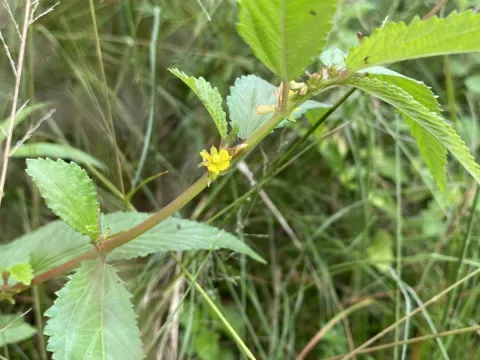
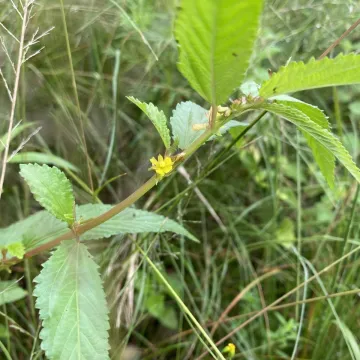
Three-toothed jute (Corchorus tridens L.) is an annual herbaceous plant belonging to the Malvaceae family. It is recognized primarily for its fibrous stems and edible leaves, serving as a dual-purpose crop in various tropical agricultural systems. The plant typically exhibits a robust growth habit with well-defined branching.
The native range of this species spans across the tropical regions of Africa, Asia, and northern Australia. It is highly adapted to savanna climates and areas characterized by intermittent rainfall patterns. Due to its hardiness, it has been integrated into traditional farming practices as a secondary crop that thrives where other more sensitive plants might fail.
Botanically, the plant is identified by its serrated leaf margins and its distinct fruit capsule, which bears three horn-like projections at the apex. The stems are rich in bast fibers, which provide the plant with significant structural strength. The root system is deep-reaching, allowing the plant to maintain growth during temporary dry spells.
Optimal cultivation requires warm conditions with temperatures between 25°C and 35°C. The species performs best in fertile, loamy soils with good drainage. Agricultural management involves precision sowing to ensure optimal plant density and active weeding during the early vegetative stage. Irrigation is only necessary in cases of prolonged drought to ensure maximum fiber quality.
Economic applications for Corchorus tridens include:
- Extraction of bast fibers for the production of cordage and burlap-like textiles.
- Consumption of young leaves as a nutritious leafy vegetable, often used in soups and stews.
- Utilization as green manure to enhance soil nitrogen levels and organic matter.
- Medicinal applications within traditional herbal systems for treating inflammatory conditions.
Common agricultural pests affecting this crop include flea beetles and aphids, which can stunt vegetative growth if left untreated. Disease management focuses on minimizing leaf spot pathogens and root rot, which are often exacerbated by high humidity and poor soil drainage. Maintaining proper plant spacing is essential to encourage air circulation and reduce the incidence of fungal attacks.
Photo gallery