Narrowleaf hawksbeard
Crepis tectorum L.
Description
Narrowleaf hawksbeard (Crepis tectorum L.) is an annual herbaceous plant belonging to the Asteraceae family. While often categorized as a problematic weed in agricultural landscapes, it possesses distinct botanical characteristics that allow it to thrive in diverse environments, from cultivated fields to disturbed open spaces.
Originating from Eurasia, this species has successfully naturalized across various continents. It is commonly found in crop fields, meadows, and along transport corridors. Its ability to adapt to different soil types and climates has made it a widespread subject of study in weed science and field management.
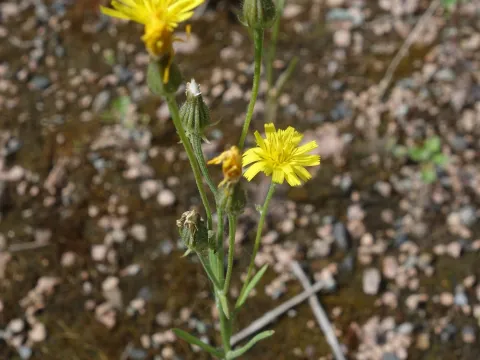
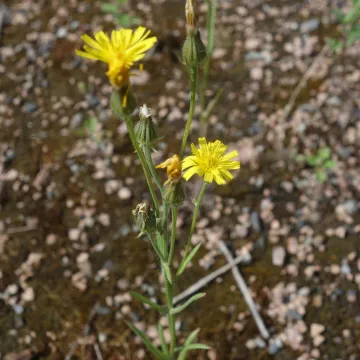
The botanical structure of Crepis tectorum features a basal rosette of leaves and an erect, branched stem that can reach significant heights. It produces small, yellow flower heads typical of the daisy family. The seeds are equipped with a pappus, which facilitates long-distance dispersal via wind, making it highly effective at colonizing new areas.
Regarding soil and climatic requirements, the plant prefers well-drained, fertile soils but shows resilience to moisture fluctuations and temperature extremes. In agricultural settings, it can act as a persistent competitor against cereals. It is particularly noted for its ability to emerge in both autumn and spring, complicating weed control programs in winter grain crops.
Management strategies focus on preventing seed set and reducing the soil seed bank through integrated practices:
- implementing crop rotation with competitive cover crops;
- mechanical weeding and timely tillage operations;
- chemical control using selective herbicides during the early growth stages;
- managing field margins to prevent wind-borne seed spread.
Photo gallery