
Description
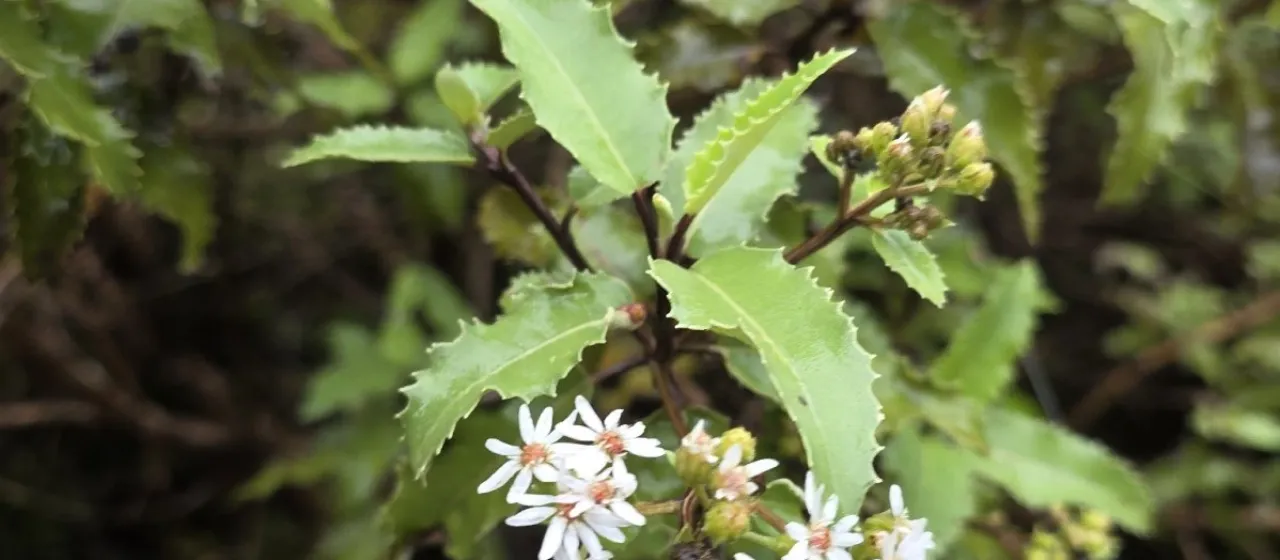
Holly-leaved olearia (lat. Olearia ilicifolia) is an evergreen ornamental shrub belonging to the Asteraceae family. It is distinct for its serrated leaves that closely resemble those of holly (Ilex), which serves as the primary inspiration for its common and scientific names. This species is highly valued for its texture and year-round green foliage.
The plant is native to New Zealand, specifically inhabiting mountain forests and subalpine scrublands. Its natural distribution is characterized by cool, moist climates and well-drained rocky terrain. Due to its origin, it thrives in temperate maritime environments and is often used in landscaping where a hardy, evergreen structural plant is required.
Botanically, Olearia ilicifolia is recognized by its narrow, lance-shaped leaves with prominent teeth along the margins. The underside of the foliage is covered in a dense, silvery-white or buff-colored tomentum (felt-like hair). In the summer, the plant produces clusters of fragrant, daisy-like white flower heads that provide significant ornamental value and attract pollinators to the garden.
Agricultural and horticultural success depends on providing a well-drained soil environment. The plant is intolerant of waterlogged soil, which can quickly lead to root decay. It prefers neutral to slightly acidic soil conditions and benefits from a sheltered location that provides some protection from severe, drying winds or intense midday sun. Light pruning is recommended after flowering to maintain a dense, tidy habit.
The primary use of this shrub is in landscape design, where it is utilized for hedging, screening, or as an accent plant in shrub borders. It is particularly effective in coastal gardens due to its relative tolerance to wind. Key pests include scale insects and spider mites, while the most common health issue is root rot, which is almost exclusively associated with improper irrigation or soil compaction.