Dalbergia retusa
Dalbergia retusa Hemsl.
Description
Dalbergia retusa, commonly recognized for producing the prized Cocobolo wood, is a prominent member of the Fabaceae family. This tropical tree is renowned globally for its dense, oily, and highly figured timber, which is considered one of the most valuable resources in the international wood market.
The native range of this species is confined to Central America, stretching from Panama up through Costa Rica, Nicaragua, and Guatemala. It typically thrives in tropical dry forests where it has evolved to survive extended droughts, a physiological trait that significantly influences the density and color patterns of its heartwood.
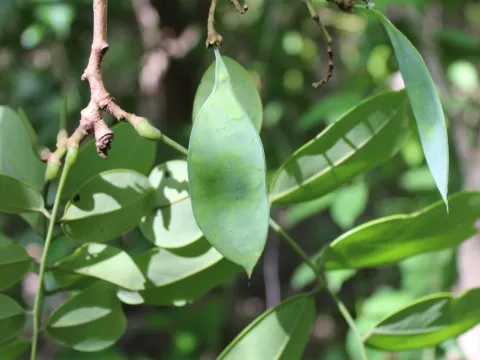
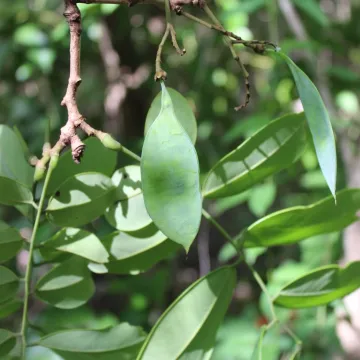
Botanically, it is a medium-sized deciduous tree reaching heights of up to 25 meters. Its foliage consists of pinnate leaves, and it produces clusters of small, fragrant flowers that lead to the development of flat, papery seed pods. The tree possesses a slow growth habit, which contributes to the superior mechanical properties of its wood.
Cultivation of Dalbergia retusa requires specific ecological conditions, primarily well-drained, nutrient-rich soils with moderate aeration. The plant is highly sensitive to waterlogging, necessitating careful site selection or the implementation of raised beds in nursery conditions. It requires full sun exposure to maintain vigorous growth and healthy development.
The primary economic application of the species is the production of luxury hardwood. Cocobolo is highly sought after by luthiers, knife makers, and fine furniture craftsmen for its exceptional durability, ease of polishing, and striking visual depth. Due to overexploitation in the wild, sustainable plantation management is becoming increasingly vital.
Common health and cultivation challenges include:
- Susceptibility to soil-borne pathogens in poorly drained areas.
- Infestation by wood-boring insects during juvenile stages.
- Need for protection against invasive weeds in plantation settings.
- Risk of physical damage from high-velocity wind events.
Photo gallery