Bog hair-grass
Deschampsia setacea
Description
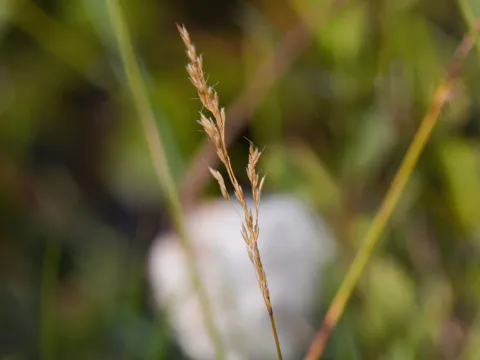
Bog hair-grass (Deschampsia setacea) is a perennial grass species belonging to the Poaceae family. This species is often recognized for its remarkable ability to thrive in oligotrophic, acidic, and nutrient-poor environments where most agricultural crops would fail. It serves as an essential component in specialized ecological projects and has unique botanical attributes that distinguish it from other meadow grasses.
The plant is native to Western and Central Europe, with its natural distribution primarily restricted to heathlands, boggy meadows, and sandy soils near water bodies. It is well-adapted to temperate climates, showing high resilience to cool temperatures. The geographic range of its cultivation is often associated with the restoration of degraded wetland sites and sandy heath areas.
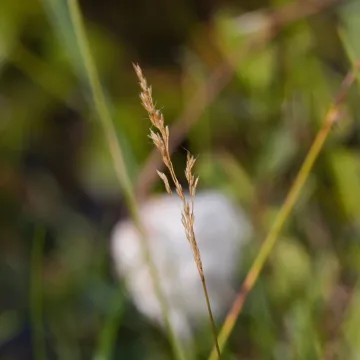
Botanically, it is characterized by its dense, tufted growth habit and very narrow, bristle-like leaves. The plant typically reaches heights of 20–50 cm. Its inflorescence is a delicate, slender panicle that becomes prominent during the flowering season, adding an aesthetic appeal to its structural form. The root system is fibrous and dense, providing excellent soil binding properties.
Cultivation requirements for Bog hair-grass focus on maintaining moist, acidic conditions. It requires very little soil amendment and is generally intolerant to heavy nitrogen fertilization. The best planting results are achieved in full sun or light shade. Agronomically, it is best established from seed sown in spring, ensuring consistent soil moisture until the plants are fully established.
In terms of practical use, it is predominantly utilized in landscape architecture for naturalistic garden designs and as a stabilizer for erosion-prone, sandy soils. While its forage value is limited due to the coarse texture of the leaves, it remains a vital species for biodiversity and soil health. Pests and diseases are rarely a problem, provided the plant is kept in its preferred acidic, moist environment, preventing potential issues with common grass-specific fungal pathogens.
- Excellent tolerance to acidic soil conditions.
- Strong soil-binding root system.
- Ideal for sustainable and low-maintenance landscaping.
- Low-input requirements for nitrogen and phosphorus.
Photo gallery