Diaz bluestem
Dichanthium annulatum (Forssk.) Stapf
Description
Diaz bluestem (Dichanthium annulatum), also known as shed-grass or ring-pegged grass, is a resilient perennial grass species within the Poaceae family. It is highly regarded in tropical and subtropical agriculture as a primary forage source due to its impressive biomass production and its ability to maintain quality even under stressful environmental conditions.
Originating from the tropical regions of Africa and Asia, Diaz bluestem has been naturalized across various continents, particularly in regions with arid or semi-arid climates. Its spread across global pastures is a testament to its ecological versatility, as it successfully colonizes various landscape types, including roadsides, neglected fields, and degraded grasslands.
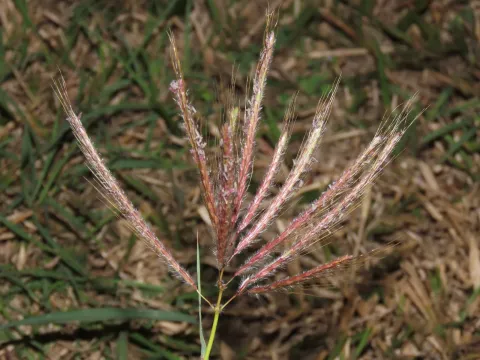
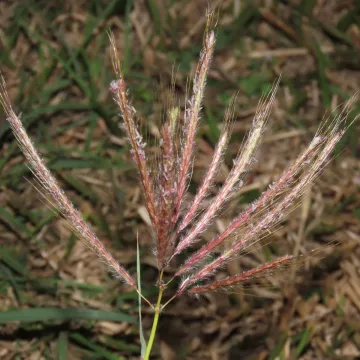
Botanically, it features ascending culms with nodes distinguished by a ring of dense, white hairs, which gives the plant its scientific name. Its growth habit is typically tufted, though it can form spreading stolons, helping it to cover ground effectively. The inflorescence consists of a digitate arrangement of racemes, often purplish in color, which are highly characteristic of this genus.
Climate and soil requirements for this species are relatively undemanding. It thrives in hot, sunny conditions and is noted for its drought tolerance. While it prefers fertile, well-drained soils, it exhibits significant salt tolerance, allowing it to grow in areas where other forage grasses fail. Soil pH ranging from neutral to moderately alkaline is ideal for optimal establishment.
In farming systems, Diaz bluestem is primarily utilized for grazing and hay production. It is palatable to livestock, particularly at the vegetative stage, and responds well to intensive management. Key agronomic practices include:
- Applying split nitrogen applications during the growing season to boost yield.
- Implementing rotational grazing to prevent overgrazing and sustain root health.
- Reseeding or overseeding in thinner patches to maintain uniform stand density.
- Timing harvest precisely before the onset of flowering to maximize nutritional value.
The crop is generally robust, but it can be susceptible to fungal diseases such as leaf rust and smut, particularly in humid or waterlogged conditions. Pests including leaf-sucking insects and grasshoppers may occasionally cause localized damage. Sustainable management strategies, including monitoring and avoiding stagnant water, are recommended to maintain healthy and productive stands over several years.
Photo gallery