Nadi blue grass
Dichanthium caricosum (L.) A. Camus
Description
Nadi blue grass (Dichanthium caricosum) is a robust perennial grass species belonging to the Poaceae family. It is widely recognized in tropical agriculture as a resilient forage crop capable of maintaining high biomass production in various environmental conditions.
Originating in Southeast Asia and parts of the Indian subcontinent, this species has spread across many tropical regions globally. It thrives in savannah-like climates, where its ability to withstand alternating wet and dry seasons makes it an essential component of pasture systems.
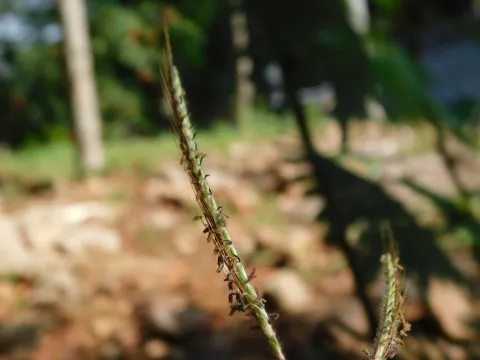
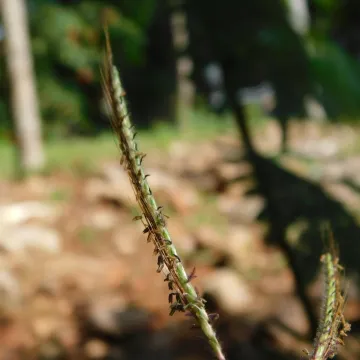
Botanically, it is characterized by creeping or ascending culms that often root at the nodes, forming dense mats of vegetation. The inflorescence is a panicle consisting of several racemes, which are typical features for grasses within the Andropogoneae tribe.
Key agronomic and growth requirements for optimal production include:
- High drought tolerance, allowing survival in arid conditions.
- Adaptation to a wide range of soil types, including heavy clay soils prone to waterlogging.
- Excellent persistence under continuous and intensive grazing pressure.
- Positive response to nitrogen fertilization in terms of forage yield and protein content.
The primary agricultural use of Nadi blue grass is as a palatable and nutritious forage for grazing livestock. It is highly valued for its ability to provide green feed during periods when other grasses might become dormant or lose quality.
Like many tropical forage species, it may be susceptible to fungal diseases such as rust and smut, particularly during periods of high humidity. Insect pests, including various grasshoppers and soil-dwelling larvae, can impact stand density, requiring integrated pest management strategies to maintain optimal productivity.
Photo gallery