German canary clover
Dorycnium germanicum
Description
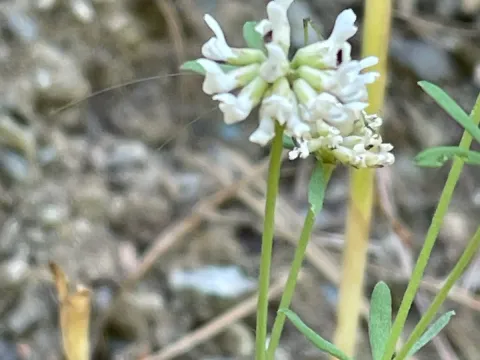
German canary clover (Dorycnium germanicum) is a perennial herbaceous plant belonging to the Fabaceae family. Native to parts of Europe, this plant is increasingly recognized in sustainable agriculture for its hardiness and environmental benefits. It acts as a versatile legume capable of thriving in various ecological zones, particularly in dry and nutrient-poor environments.
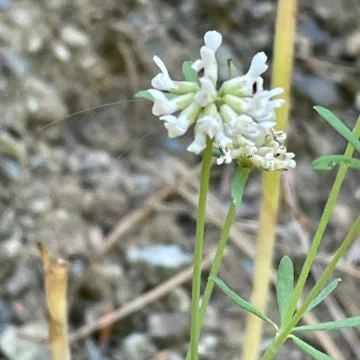
Botanically, it is defined by its characteristic palmately compound leaves consisting of five leaflets. The plant develops a robust, deep taproot system, which is the key to its survival in drought-prone areas. Its growth habit is semi-shrubby, providing stability and resilience. The small, pea-like flowers bloom in dense heads, attracting pollinators and contributing to the biodiversity of the agroecosystem.
Regarding climate and soil, the plant exhibits excellent drought tolerance and is adapted to dry, well-drained soils, including rocky or calcareous sites. It does not tolerate waterlogging, as excessive moisture can lead to root damage. Its nitrogen-fixing capability allows it to improve soil fertility, making it a valuable candidate for land reclamation and improving degraded pasture lands.
In terms of agricultural use, it is highly valued for forage production. The foliage is rich in protein and palatable to livestock, particularly sheep and cattle grazing in Mediterranean or steppe-like conditions. Beyond fodder, it serves as an excellent ground cover for erosion control on slopes and hillsides, effectively stabilizing the soil through its extensive root network.
Cultivation requires careful management during the establishment phase, specifically weed control, as the plant is slow to germinate and develop initially. Once established, it is remarkably low-maintenance. Common challenges include root rot diseases, often associated with poor drainage, and potential damage by specific legume-feeding insects. Periodic mowing or rotational grazing promotes regrowth and maintains the health of the stand.
- Exceptional drought resistance and adaptability.
- High protein content for ruminant livestock.
- Effective soil stabilization and erosion prevention.
- Natural soil enrichment via nitrogen fixation.
Photo gallery