Dorycnium pentaphyllum
Dorycnium pentaphyllum
Description
Dorycnium pentaphyllum is a perennial subshrub belonging to the Fabaceae family. It is a highly resilient agricultural species recognized for its ability to thrive in degraded, nutrient-poor, and arid soils where most conventional forage crops fail to survive.
Native to the Mediterranean Basin, this plant has adapted to warm, dry summers and mild, wet winters. Its natural range extends across Southern Europe, North Africa, and the Middle East, where it serves as a critical component of spontaneous rangelands and semi-natural pastures.
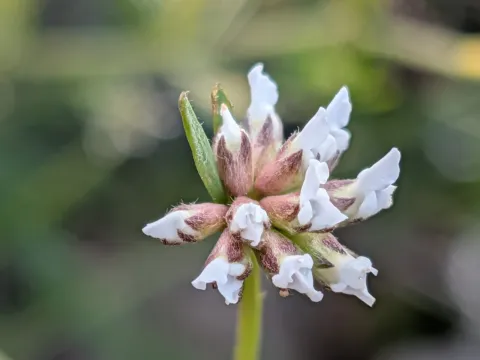
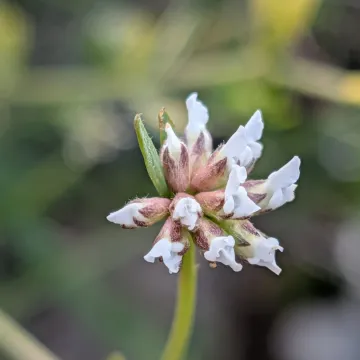
The plant exhibits specific botanical traits, including woody stems at the base, finely divided pinnate leaves with five leaflets, and small, white or pinkish-white flowers clustered in globular inflorescences. Its deep root system allows for significant water uptake, ensuring survival throughout the peak of summer drought.
In terms of agricultural management, Dorycnium pentaphyllum thrives in well-drained, alkaline, or calcareous soils. It requires full sunlight to maintain vigor. Establishing a crop requires patience, as initial growth is slow, but once established, it becomes very hardy. Minimal fertilization is usually sufficient because the plant fixes atmospheric nitrogen.
The primary economic uses of the crop include fodder production for sheep and goats, soil stabilization on steep slopes prone to erosion, and land restoration programs. Its ability to tolerate overgrazing makes it a sustainable choice for semi-arid grazing management systems. While generally disease-resistant, growers should remain vigilant regarding root rot in poorly drained, overly moist conditions.
Pests typical to other legumes, such as aphids or certain weevils, may occasionally affect the plant, but these rarely cause significant economic damage in field conditions. Due to its robustness, it remains an essential species for biodiversity and sustainable land use in Mediterranean climates.
Photo gallery