
Drynaria meyeniana
Drynaria meyeniana
Description
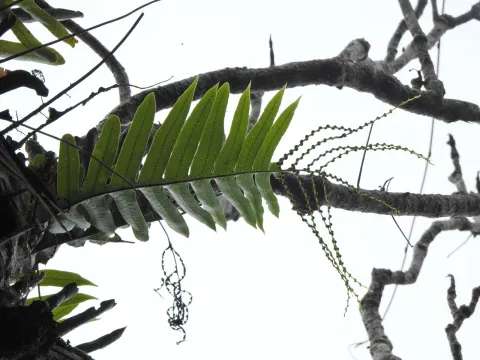
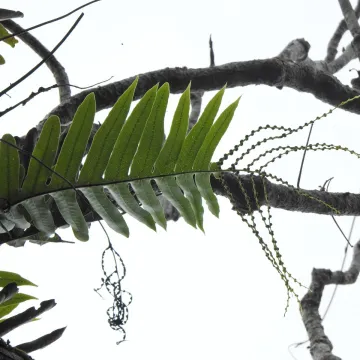
Drynaria meyeniana is a striking epiphytic fern species belonging to the Polypodiaceae family. It is widely recognized for its distinct dimorphic fronds: basal sterile fronds, often called nest fronds, which are oak-leaf shaped and adapted to collect falling debris, and larger, pinnate fertile fronds that emerge from the thick, creeping rhizomes.
The plant originates from the tropical regions of Southeast Asia, specifically the Philippines and Taiwan. Growing primarily as an epiphyte in high-canopy environments or on rock crevices, it has evolved a highly efficient mechanism for trapping moisture and organic material, allowing it to thrive in nutrient-poor ecological niches.
In cultivation, Drynaria meyeniana requires conditions that replicate a humid tropical environment. The ideal temperature range is between 18°C and 26°C. It is crucial to provide a well-draining, chunky substrate composed of orchid bark, perlite, and sphagnum moss to ensure that the rhizomes receive sufficient aeration while retaining enough moisture.
Agricultural and horticultural management involves maintaining high ambient humidity and moderate, consistent watering. The plant thrives in bright, indirect light; harsh direct sunlight can scorch its delicate fronds. During the active growing season, diluted liquid fertilizers can be applied sparingly to support the development of its prominent, fuzzy rhizomes.
This fern is primarily cultivated for its high ornamental value in indoor gardening and tropical landscaping. Its unique architectural form makes it a favorite for vertical gardens, terrariums, and hanging baskets. It is particularly valued by botanical enthusiasts who appreciate plants that display complex physiological adaptations to their environment.
- High humidity levels are essential for success.
- Ensure excellent drainage to prevent rhizome rot.
- Avoid over-fertilizing during the winter dormancy period.
- Watch for common pests like scale insects and spider mites.
Photo gallery