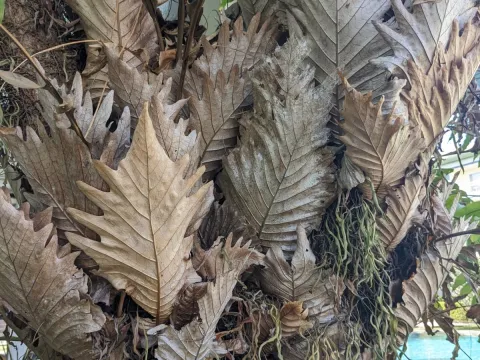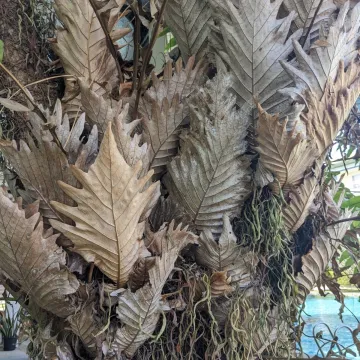
Oak-leaf fern
Drynaria quercifolia
Description
The Oak-leaf fern (Drynaria quercifolia) is a distinctive epiphytic fern species belonging to the Polypodiaceae family. It is widely recognized for its unique adaptation to epiphytic life, where it uses specialized nest-like leaves to capture decaying matter and water from its host environment.
Originating from the tropical forests of Southeast Asia, India, and Australia, this plant thrives in humid, shaded environments. In professional cultivation, it is often utilized as an ornamental plant in botanical conservatories or as a specialized crop for those interested in rare tropical foliage.
The botanical architecture of this plant includes dimorphic fronds. The sterile leaves resemble oak foliage and act as a cradle for debris, while the fertile fronds, which are deeply pinnate, are responsible for spore production. Its rhizomes are thick, fleshy, and densely covered with reddish-brown scales.
Cultivation requirements include a well-drained, porous growing medium consisting of bark, sphagnum moss, and charcoal. Because it is an epiphyte, airflow around the root system is critical to prevent rot. The plant prefers indirect bright light and should be kept consistently moist but not waterlogged.
- Maintain temperatures above 18°C.
- Use diluted liquid fertilizers during the growing season.
- Provide high relative humidity (above 60%).
- Monitor for scale insects and spider mites.
Historically, the plant has been used in traditional medicine, particularly for its anti-inflammatory properties and its efficacy in treating skin conditions. Its hardy nature makes it a fascinating subject for agricultural study and conservatory horticulture, provided that its specific tropical microclimate needs are met.
Photo gallery