Paterson's curse
Echium plantagineum L.
Description
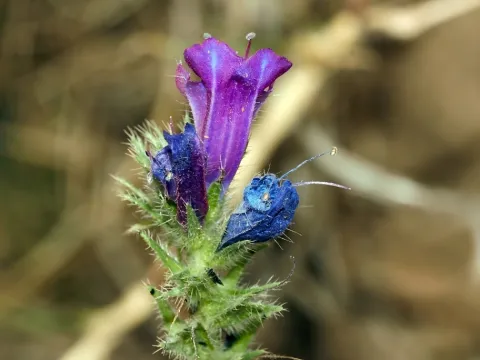
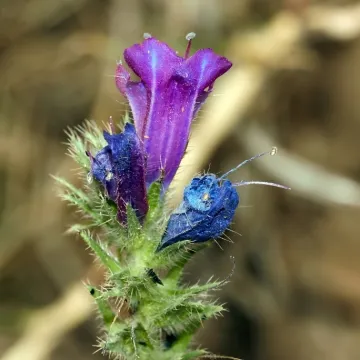
Paterson's curse (Echium plantagineum L.) is a herbaceous plant belonging to the Boraginaceae family. While often classified as a wild plant or weed in certain regions, it is valued in specialized agricultural contexts, particularly for its exceptional nectar production and role in supporting pollinator populations. The plant is characterized by its distinct rosette leaves and striking purple-blue flowers.
Originating from the Mediterranean region, this species has spread across many temperate climates globally, including parts of Australia and the Americas. It is known for its ability to colonize disturbed soils and adapt to diverse environmental conditions. Its success as a widespread plant is largely attributed to its efficient reproductive strategies and tolerance for varying moisture levels.
Botanically, Echium plantagineum is an annual or biennial herb with a coarse, hairy appearance. It develops a deep taproot that facilitates survival in dry conditions. The inflorescence is a typical scorpioid cyme, which produces numerous flowers over an extended season. The plant's morphology is designed for optimal interaction with long-tongued insects, making it a key species for apiculture.
Cultivation of this plant requires well-drained, fertile to moderately fertile soils. It thrives in full sun and is sensitive to waterlogging, which can cause significant root damage. Agricultural management involves selecting appropriate sites and monitoring planting density to ensure healthy growth. Because it can propagate rapidly via seeds, careful spatial planning is required when integrating it into managed agricultural systems.
- Excellent source of high-quality nectar
- Strong taproot system for soil stabilization
- Resilience in arid and semi-arid environments
- High biomass production potential
The primary economic use of this plant is within the beekeeping industry, where it is highly prized for supporting honey production. In some regions, it is used as a forage plant, though grazing management is critical due to its alkaloid content, which can be toxic to livestock if consumed in large quantities. Common pests include various beetles, while fungal pathogens may occur if the plant is grown in overly dense or humid conditions.
Photo gallery