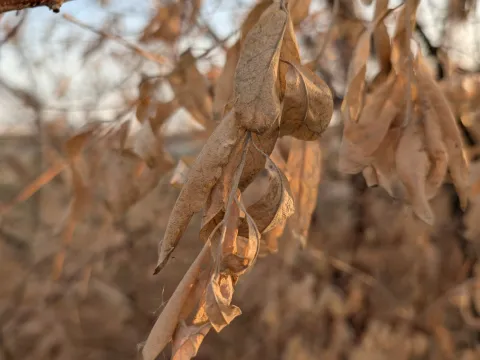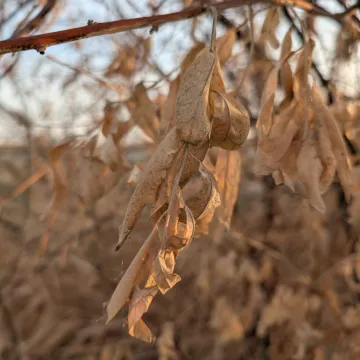
Russian olive
Elaeagnus angustifolia L.
Description
Russian olive (Elaeagnus angustifolia L.) is a deciduous tree or large shrub belonging to the Elaeagnaceae family. Known for its silvery foliage and fragrant flowers, it is a highly adaptable plant that has become a staple in various agricultural and ecological management projects across the world.
The species is native to Central and Western Asia but has become widely naturalized across North America, Europe, and parts of the Southern Hemisphere. It thrives in diverse climates, ranging from semi-arid regions to temperate zones. Its ability to tolerate harsh environmental conditions makes it a frequent choice for forest shelterbelts and land reclamation efforts.
Botanically, the plant is characterized by its thorny branches and narrow, lanceolate leaves covered with silvery scales. These scales help the tree reflect sunlight and conserve moisture during periods of intense heat. The fruit is a small, brownish, oval drupe containing a mealy, sweet-tasting flesh, which is often consumed by wildlife and birds during the winter months.
From an agronomic perspective, the Russian olive is remarkably resilient. It grows well in various soil types, including sandy, alkaline, and saline soils where many other species would fail. The plant forms a symbiotic relationship with nitrogen-fixing bacteria, allowing it to improve the quality of degraded soils. Maintenance is minimal, primarily involving occasional pruning to manage height and spread.
Key хозяйственное uses for this culture include:
- Erosion control and windbreaks in agricultural fields.
- Nectar source for honey production.
- Restoration of degraded land and saline soils.
- Ornamental use for hedges and privacy screens in rural areas.
Common issues include susceptibility to certain fungal diseases, such as verticillium wilt, particularly if planted in waterlogged soils. While generally pest-resistant, young trees can occasionally be affected by scale insects or leaf-feeding caterpillars. Proper site selection with good drainage and spacing remains the most effective strategy for preventing disease and ensuring healthy, long-term development of the crop.
Photo gallery