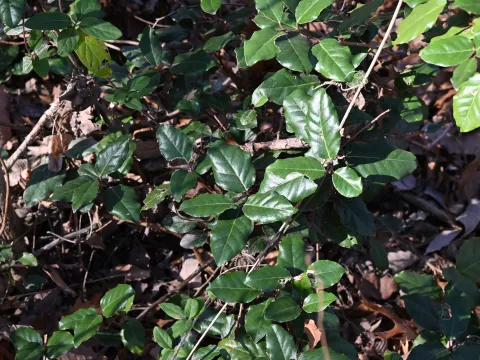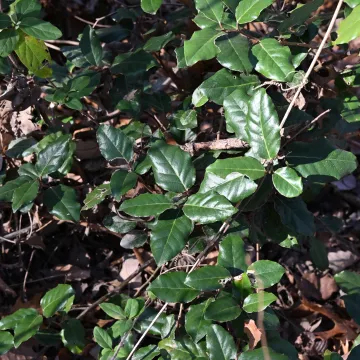
Ebbinge's silverberry
Elaeagnus x ebbingei Boom
Description
Ebbinge's silverberry (Elaeagnus x ebbingei) is a robust evergreen shrub belonging to the family Elaeagnaceae. It is a hybrid of Asiatic origin, known for its rapid growth rate and year-round dense foliage. In agricultural and horticultural contexts, it is highly valued for its versatility and resilience in challenging environmental conditions.
Originally developed through hybridization, the plant inherits a wide range of adaptations from its parent species. It thrives in diverse climates, particularly in coastal regions, where it exhibits remarkable tolerance to strong, salt-laden winds. This makes it a preferred choice for areas where other ornamental species would struggle to survive.
Botanically, the plant is characterized by leathery, elliptic leaves with a distinctive silvery underside. One of its most notable biological features is its ability to host nitrogen-fixing bacteria in its root nodules, which enriches the surrounding soil. The plant produces fragrant, creamy-white autumn flowers followed by small, edible orange drupes.
The cultivation requirements are relatively low. The plant prefers sunny locations with well-drained, slightly alkaline to neutral soil. Once established, it becomes highly drought-tolerant. Maintenance practices should focus on structural pruning to manage its vigorous lateral growth, ensuring the plant retains a tidy form, especially when used in formal hedging.
The main agricultural and utility uses include:
- Establishing robust windbreaks to protect crops or property.
- Creating evergreen screens and hedges for privacy and noise reduction.
- Soil stabilization on embankments prone to erosion.
- Providing a reliable source of late-season nectar for pollinators.
While generally hardy, the plant can be susceptible to scale insects and mealybugs, particularly if the foliage density prevents proper airflow. Fungal infections, such as root rot, may occur in waterlogged soils. Maintaining proper spacing and ensuring excellent soil drainage are the most effective strategies for preventing common health issues in this species.
Photo gallery