Thorny Olive
Elaeagnus pungens Thunb.
Description
Thorny Olive (scientific name Elaeagnus pungens Thunb.) is an evergreen ornamental shrub belonging to the Elaeagnaceae family. This species is widely recognized for its robust, branching habit and the presence of sharp thorns on its stems, allowing it to form dense, impenetrable thickets that can reach heights of up to 4 meters.
Native to East Asia, including Japan and China, this plant has been introduced to various temperate and subtropical regions globally. It is highly valued for its exceptional adaptability, allowing it to thrive in challenging environments where other ornamental plants might struggle to survive.
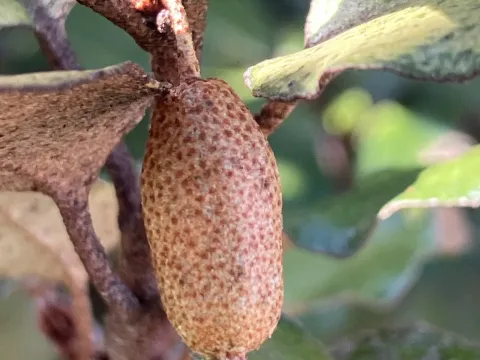
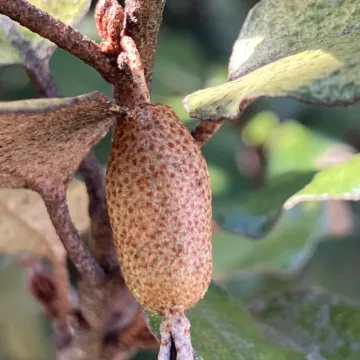
Botanically, Elaeagnus pungens features leathery, elliptical leaves with a distinct silver-scaled underside. The plant produces small, highly fragrant, creamy-white flowers during the autumn season. The fruits are small, reddish drupes that are edible and provide food for various bird species, further enhancing the plant's ecological value.
The cultivation requirements for Thorny Olive are minimal. It thrives best in sunny locations with well-drained, fertile soil, though it is remarkably tolerant of poor, sandy, and saline soils. A key agronomic feature is its symbiotic relationship with nitrogen-fixing bacteria, which allows the plant to improve soil fertility and maintain health in low-nutrient conditions.
- Location: Full sun to partial shade for optimal growth.
- Watering: Highly drought-tolerant once established.
- Maintenance: Can be pruned into formal hedges or left as a natural barrier.
- Fertilization: Rarely needed due to nitrogen-fixing properties.
- Hardiness: Moderately cold-tolerant; prefers sheltered sites in colder zones.
In terms of practical usage, Thorny Olive is primarily utilized in landscape architecture for windbreaks, hedging, and slope stabilization. Its natural resistance to pests and diseases makes it a low-maintenance, cost-effective solution for large-scale landscaping projects. Furthermore, its fragrant flowers make it a beneficial addition to gardens focused on supporting local pollinator populations.
Photo gallery