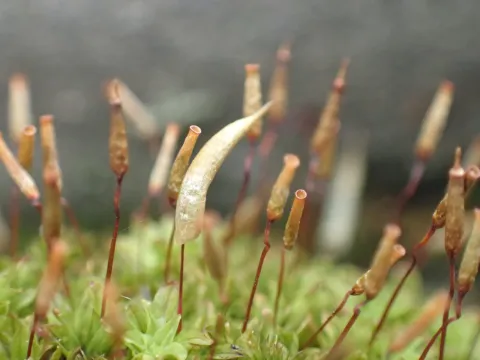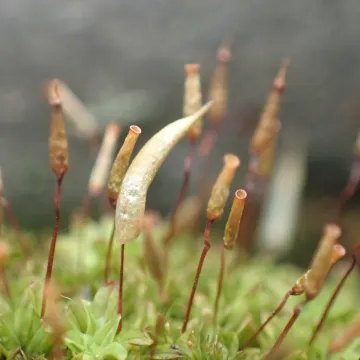

Common extinguisher moss
Encalypta vulgaris
Description
Common extinguisher moss (Latin: Encalypta vulgaris) is a species of acrocarpous moss belonging to the family Encalyptaceae. While not categorized as a traditional agricultural crop, this bryophyte is an essential component of soil ecosystems and serves as a natural indicator of environmental health.
The species has a widespread distribution across the Northern Hemisphere, inhabiting a variety of landscapes from rocky outcrops to calcareous soils. Its natural range encompasses diverse climatic zones, where it demonstrates remarkable resilience to environmental fluctuations, primarily due to its ability to colonize nutrient-poor substrates.
Botanically, Encalypta vulgaris is recognized by its small, tufted green growth form. Its most distinctive feature is the long, cylindrical calyptra, which resembles an extinguisher—hence the common name. The leaves are typically lingulate or spatulate, possessing a strong midrib that aids in structural integrity and moisture retention.
Environmental requirements include a preference for neutral to alkaline soil conditions, particularly those derived from limestone or chalk. While no formal agricultural techniques are applied to this moss, its successful establishment in restoration projects depends on maintaining adequate moisture and preventing excessive competition from faster-growing invasive plant species.
The primary utility of this moss is found in scientific research and ecological monitoring. It is frequently studied for its role in primary succession and its potential to monitor heavy metal accumulation in the environment. Due to its unique chemical composition, it shows high resistance to common fungal pathogens and invertebrate pests that affect vascular flora.
Photo gallery