Eremophila calorhabdos
Eremophila calorhabdos
Description
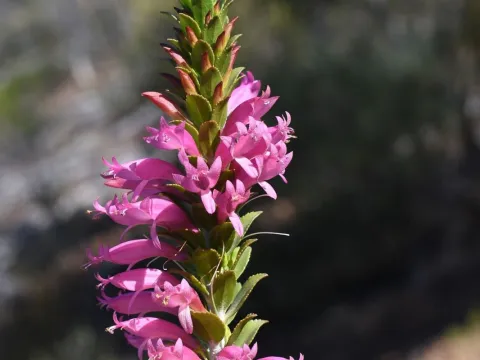
Eremophila calorhabdos, commonly known as the Spiked Eremophila, is a member of the Scrophulariaceae family and is highly prized for its unique architectural form. As a perennial evergreen shrub, it stands out for its vertical, slender growth habit, making it an excellent candidate for modern landscaping and xeric gardens that require low-maintenance, drought-resistant specimens.
Native to the arid regions of Western Australia, this species is well-adapted to extreme environmental conditions. Its natural habitat includes sandy and stony soils where water availability is highly erratic. Because of this evolutionary history, the plant has developed robust physiological traits that allow it to thrive in full sun with minimal supplemental irrigation once established.
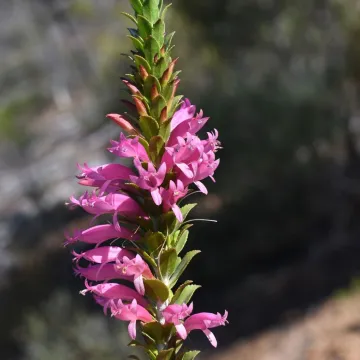
The botanical structure of the plant consists of dense, linear foliage and distinct tubular flowers that range from vivid pink to deep reddish-purple. These flowers are clustered along the upper parts of the stems, creating a striking visual display during the flowering season. The plant typically reaches a height of 1 to 2 meters, maintaining a narrow profile that suits narrow planting strips or garden corners.
Cultivation requirements focus on mimicking its native environment. A site with full sun exposure is mandatory for healthy development and flower production. The most critical factor is soil drainage; the plant will quickly succumb to root rot if planted in heavy, clay-based, or constantly damp soils. It performs best in poor, well-draining sandy soils with a neutral or alkaline reaction.
Effective management and maintenance practices include:
- Pruning lightly after flowering to encourage a dense, bushy appearance.
- Avoiding excessive fertilizer applications to prevent leggy, weak growth.
- Providing a deep, infrequent watering regime only during extreme heatwaves.
- Monitoring for common garden pests like aphids, which may appear if the plant is overly stressed or shaded.
Photo gallery