Winter apple bush
Eremophila debilis
Description
Eremophila debilis, commonly referred to as the winter apple bush, is a distinctive shrub belonging to the Scrophulariaceae family. This plant is a notable member of the diverse Australian flora, celebrated for its resilience and unique aesthetic appeal in both natural and cultivated landscapes.
The plant originates from the eastern regions of Australia, particularly thriving in New South Wales and Queensland. It is naturally adapted to a range of dry, semi-arid environments. Over time, it has developed mechanisms to survive in fluctuating temperature zones and environments where water scarcity is a frequent challenge for vegetation.
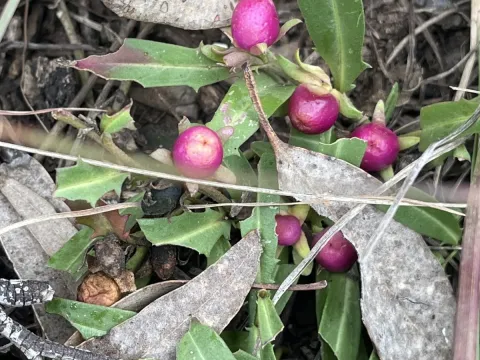
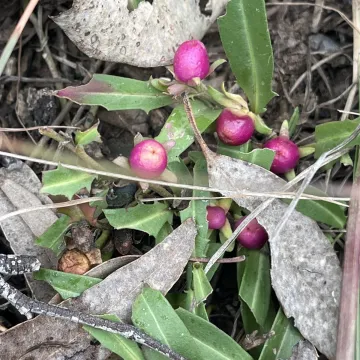
Botanically, Eremophila debilis manifests as a low-growing or prostrate shrub with lanceolate leaves that often carry a subtle sheen. The plant produces delicate tubular flowers, which are typically white, pale pink, or lilac. Following the flowering phase, it develops succulent fruits that resemble small apples or berries, providing a unique visual interest throughout the season.
Cultivation requirements involve providing full exposure to sunlight and ensuring the planting medium is exceptionally well-draining. While the plant can tolerate various soil types, it performs best in sandy or gravelly loam. Agronomic management is relatively straightforward: once established, the plant requires minimal supplementary irrigation and is highly suited for water-wise gardening or xeriscaping.
The primary economic and ornamental use of the species lies in landscape architecture, particularly for ground cover and soil stabilization in arid or coastal areas. Common challenges include root rot if planted in heavy, waterlogged soils. Monitoring for common sap-sucking pests like aphids is recommended, though the plant is generally robust against most agricultural pests.
- Excellent drought tolerance.
- Thrives in full sun conditions.
- Ideal for xeriscaping and soil erosion control.
- Low maintenance requirements.
- Attractive ornamental fruit production.
Photo gallery