Hupeh anemone
Eriocapitella hupehensis
Description
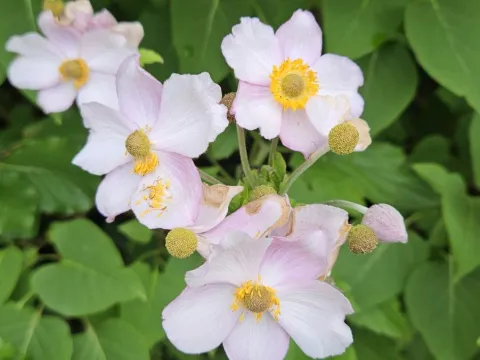
The Hupeh anemone (Eriocapitella hupehensis), formally known as Anemone hupehensis, is a significant species within the Ranunculaceae family. This perennial herb is widely recognized for its late-season blooms, providing aesthetic value to gardens during the autumn months when most other perennials have ceased flowering. The plant is characterized by its robust habit and graceful floral displays.
Native to central and eastern China, this species has been introduced and cultivated across various temperate regions globally. It thrives in environments where moderate rainfall and protected areas are available, making it a popular choice in ornamental horticulture. Its natural habitat includes woodland margins and rocky slopes, which dictates its preferred growing conditions in a domestic garden.
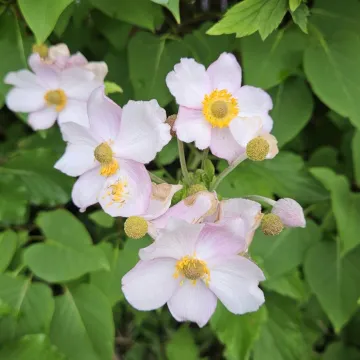
Botanically, the Hupeh anemone features a fibrous root system with creeping rhizomes, facilitating its ability to colonize space. The foliage consists of basal, trifoliate leaves with serrated margins. The flowering stems arise from the base, bearing multiple blooms with simple or semi-double petals, typically ranging in color from white to deep shades of mauve and pink, often with contrasting yellow centers.
Agricultural and horticultural requirements emphasize the need for well-draining, nutrient-rich, and moisture-retentive soil. While the plant prefers partial shade, it can tolerate more sun in cooler northern climates. Proper care includes consistent moisture levels, particularly during the growing season, and the application of organic mulch to regulate soil temperature and inhibit weed growth.
The primary use of the Hupeh anemone is in landscape design, where it is utilized for mass planting, borders, and woodland gardens. It is also valued as a cut flower in professional floristry. Common phytosanitary issues include powdery mildew and fungal leaf spots, which are best managed through proper spacing and moisture control. Root rot can occur if soil drainage is insufficient.
- Soil Type: Loamy, slightly acidic to neutral.
- Propagation: Root division in early spring or autumn.
- Watering: Consistent; avoid drought and waterlogging.
- Fertilization: Balanced NPK fertilizer applied in spring.
- Plant Spacing: 40–60 cm for optimal aeration.
Photo gallery