Eryngium carlinae
Eryngium carlinae F. Delaroche
Description
Eryngium carlinae is a distinct perennial herb belonging to the Apiaceae family. This species is recognized for its adaptation to rugged environments, presenting a robust structure that allows it to thrive in conditions where other ornamental crops would fail due to water or soil constraints.
The plant originates from the mountainous regions of Mexico and Central America. Its native habitat consists of rocky slopes and open, exposed areas, which has shaped its physiological evolution, favoring drought tolerance and a deep, penetrating taproot system for anchoring and moisture retention.
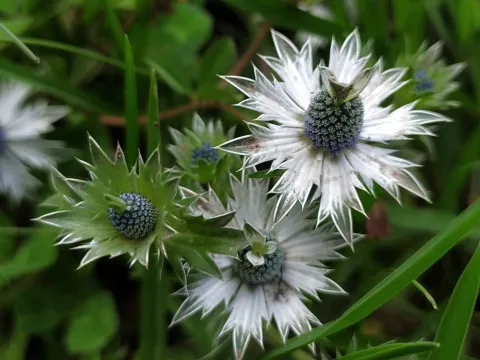
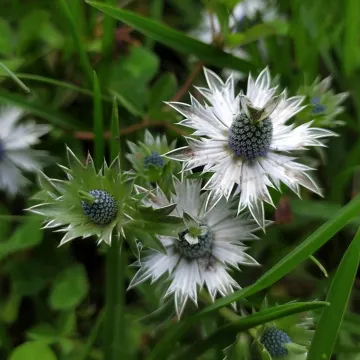
Botanically, Eryngium carlinae features a basal rosette of coriaceous, serrated leaves and characteristic globose flower heads. The structure of the inflorescence is typical of the genus, providing a unique architectural element in horticultural plantings, with colors ranging from green to soft metallic blues.
Regarding agrotechnical requirements, the plant demands excellent drainage. It thrives in poor, gravelly soils and requires full sun exposure. Growers must ensure that the soil does not retain excess water, as the primary threat to the plant's health in a controlled environment is root rot caused by poor drainage.
The main use of the plant is in ornamental horticulture, particularly for xeriscaping and rock garden designs. Beyond its aesthetic value, it is valued for its hardiness and low maintenance requirements. While less common in modern industrial agriculture, it holds historical significance in ethnobotany for its traditional medicinal properties.
- Thrives in full sun and well-draining soil.
- Highly drought-tolerant once fully established.
- Minimal fertilization requirements.
- Resistant to most common garden pests and diseases.
Photo gallery