Description
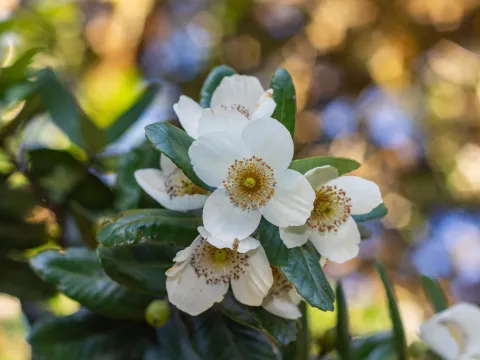
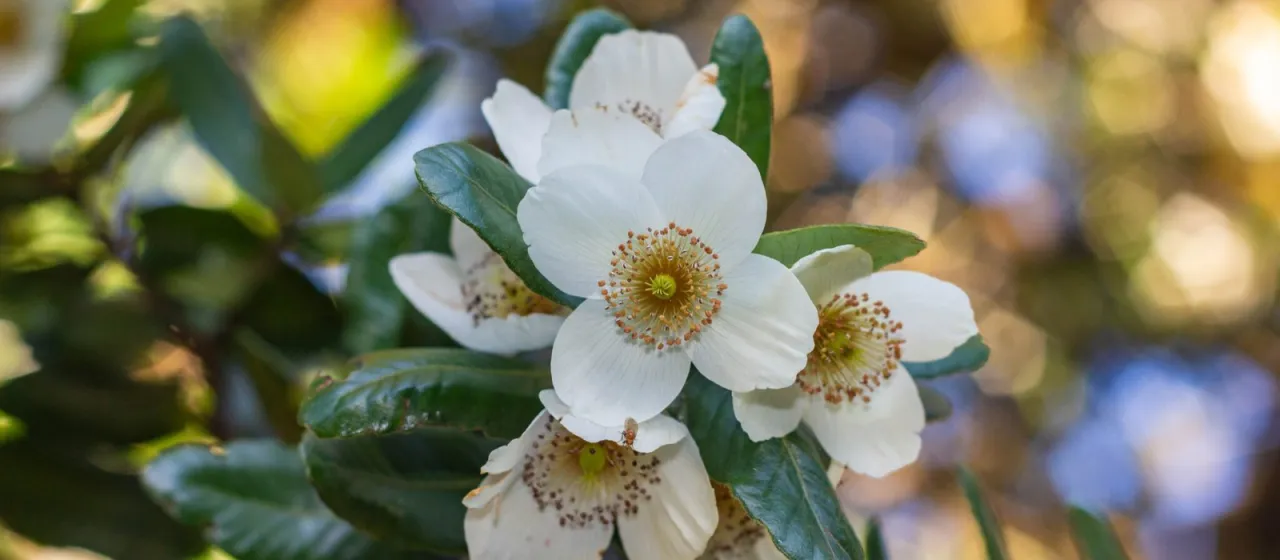
Eucryphia cordifolia, commonly known as the Ulmo tree, is a remarkable evergreen species belonging to the Cunoniaceae family. This tree is highly valued for its striking pyramidal habit and its spectacular display of pure white flowers during the summer months, which contrast beautifully against its dark, lustrous foliage.
The native habitat of this plant is located in the temperate rainforests of Chile and parts of Argentina. It thrives in regions characterized by high atmospheric humidity and mild temperatures. Because of these origins, it performs best in sheltered garden positions where it is protected from cold, desiccating winds and excessive frost.
Botanically, the leaves are evergreen, heart-shaped (hence the name "cordifolia"), and possess a serrated margin. The flowers are the primary feature, showcasing four large petals and a prominent cluster of stamens. This structure makes the tree highly attractive to pollinators, especially bees, which forage heavily on its nectar.
The cultivation requirements are specific: it demands moist, fertile, and slightly acidic soil with excellent drainage. Although it enjoys a sunny position, its roots prefer to stay cool and shaded, which can be achieved through generous mulching. It is a slow-to-moderate grower and is generally resistant to pests if provided with the correct growing conditions.
In terms of economic use, the tree is world-renowned in the apiculture industry. It is considered one of the most important nectar sources in its native region, producing high-quality honey that is light in color and rich in flavor. Potential issues include fungal infections during damp weather and occasional infestations of scale insects or aphids.
Photo gallery