Description
Eucryphia x nymansensis is a spectacular evergreen or semi-evergreen shrub or small tree belonging to the Cunoniaceae family. This hybrid, commonly known as Eucryphia Nymansay, resulted from the cross-pollination of Eucryphia cordifolia and Eucryphia glutinosa. It is highly regarded in horticulture for its narrow, upright habit and its late-summer display of large, white, fragrant flowers.
Originating from the Nymans garden in Sussex, England, the plant is best suited for oceanic climates with cool, moist summers and mild winters. It thrives in regions like the coastal United Kingdom, the Pacific Northwest of North America, and parts of New Zealand. In colder environments, the plant struggles to survive, necessitating careful site selection or container culture to protect it from harsh frost.
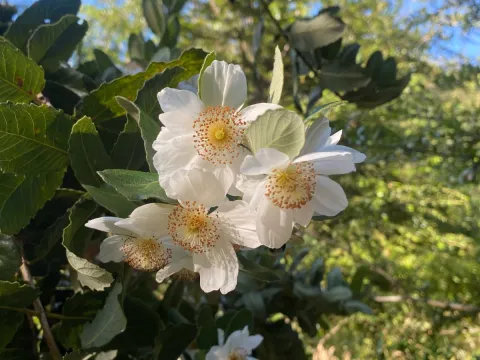
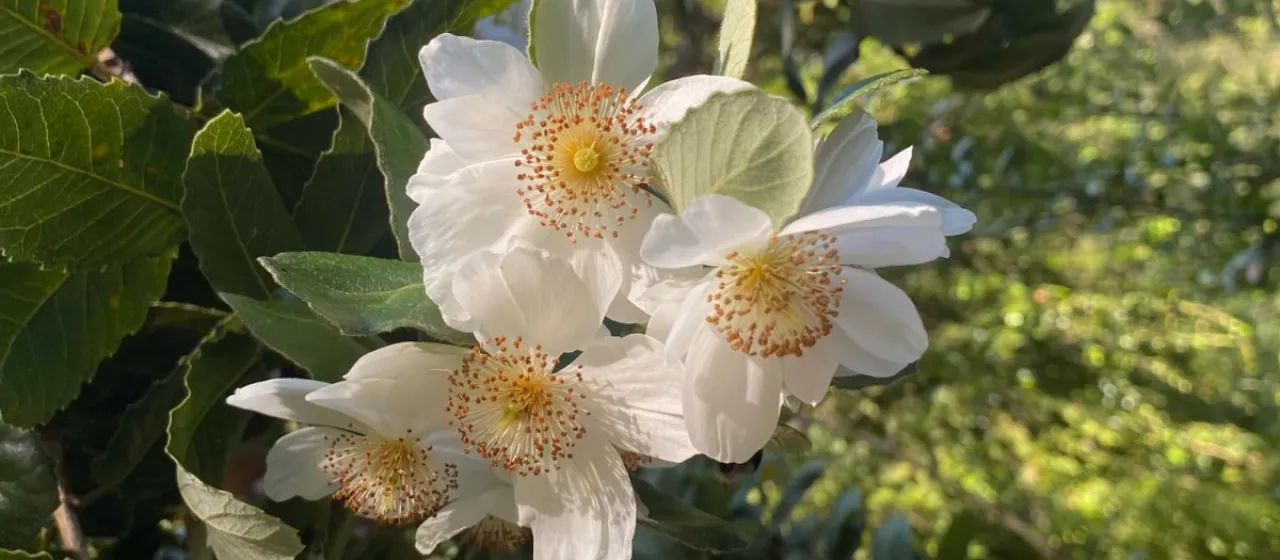
Botanically, the plant features glossy, dark green foliage that provides a lush backdrop for the blooms. The flowers are arguably the plant's greatest feature; they typically appear in late August and September, featuring four broad white petals and a dense, golden center of stamens. These flowers are highly attractive to pollinators, particularly bees, and contribute significantly to late-season biodiversity in the garden.
Agronomic success depends on specific soil conditions. Eucryphia prefers well-drained, acidic to neutral soil enriched with organic matter. A key aspect of care is the "cool roots" requirement: the plant thrives when the soil temperature is kept low and stable. This is effectively managed by applying a thick layer of organic mulch around the base of the plant and choosing a spot that offers some shade from the hottest afternoon sun.
The species is generally robust and requires minimal intervention if provided with the right environment. Common issues include:
- Root rot if planted in heavy, waterlogged clay soils.
- Winter dieback if the plant is exposed to extreme cold or biting winds.
- Iron chlorosis when grown in soils that are too alkaline or rich in lime.
Photo gallery