
Japanese spindle
Euonymus japonicus Thunb.
Description
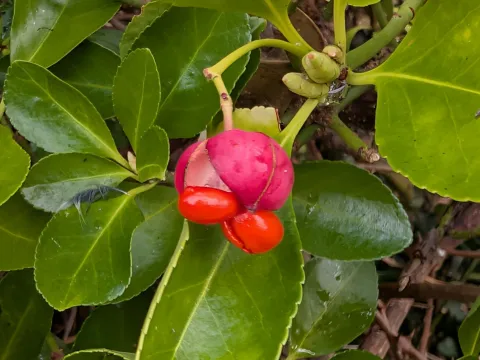
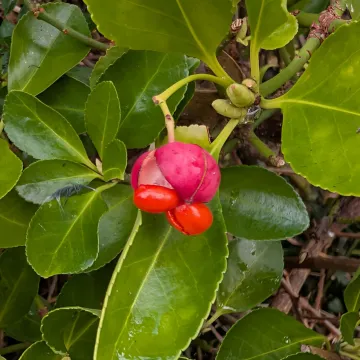
Japanese spindle (Euonymus japonicus Thunb.) is an evergreen decorative shrub belonging to the Celastraceae family. It is widely recognized for its robust growth habit and versatility, making it a staple plant in ornamental horticulture across various climatic zones.
Native to East Asia, specifically Japan, Korea, and China, the plant has a long history of cultivation in temperate and subtropical climates. Its adaptability has allowed it to naturalize in numerous regions worldwide, where it is highly valued for its ability to provide year-round greenery and structure to garden designs.
Botanically, Euonymus japonicus is defined by its thick, glossy, leathery leaves that may be solid green or variegated with yellow or white edges. It develops a dense, upright branching system that makes it highly effective for hedging. While it produces inconspicuous flowers in the summer, its primary appeal remains its durable and vibrant foliage.
Cultural requirements involve planting the shrub in well-draining, fertile soil with a neutral to slightly alkaline pH. It thrives in full sun to partial shade, though variegated varieties often prefer more sunlight to maintain their leaf coloration. Maintenance practices include routine irrigation, especially during dry spells, and regular pruning to encourage dense growth and maintain the desired shape.
The primary use of the Japanese spindle is in landscaping and garden architecture, where it is utilized for borders, screens, and topiary. It is particularly valued for its tolerance to pollution and coastal conditions. Gardeners must remain vigilant against common pests such as spider mites, aphids, and scale insects, as well as fungal diseases like powdery mildew, which can be managed with regular inspection and appropriate applications of horticultural oil or fungicides.
Photo gallery