Hamilton's spindle
Euonymus hamiltonianus Wall.
Description
Hamilton's spindle (Euonymus hamiltonianus) is a deciduous shrub or small tree belonging to the Celastraceae family. Renowned for its elegant branch structure and vibrant autumn foliage, this species is a popular choice for ornamental gardening, providing a striking visual impact during the transition from late summer to winter.
Native to the mountainous regions of Eastern Asia, specifically the Himalayas, China, and Japan, this plant is naturally adapted to cool, woodland environments. Its geographical origins influence its preferences for sheltered sites and stable moisture levels, making it a reliable performer in temperate gardens where it can receive adequate seasonal rainfall.
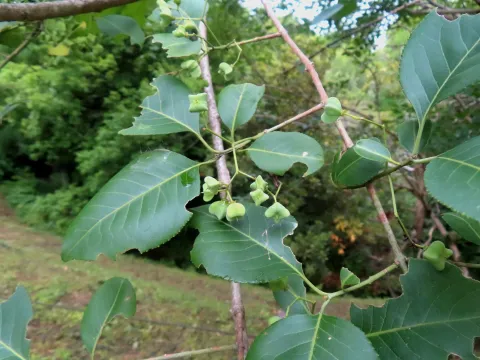
Botanically, the plant is distinguished by its opposite, serrated leaves and unique, four-lobed capsules. As these capsules mature, they split to reveal bright, fleshy seeds, which remain on the branches after the leaves have fallen. This feature makes Hamilton's spindle a point of interest in the landscape throughout the late autumn season when many other plants have lost their appeal.
To ensure healthy growth, the plant requires deep, well-drained, and moderately fertile soil. It thrives in positions ranging from full sun to partial shade, though it performs best when protected from harsh, desiccating winds. Routine agronomic practices include spring fertilization, regular pruning to maintain an attractive shape, and consistent irrigation during the peak growth season.
The primary use of Euonymus hamiltonianus is within landscape architecture, where it is utilized as a specimen plant or within shrub borders. While highly decorative, it is important to note that the plant contains compounds that can be toxic if ingested, which is typical for the genus. Growers should also monitor for common pests such as aphids and spider mites to ensure the health of the foliage.
- Excellent autumn color display.
- Hardy in a variety of temperate climates.
- Needs well-drained soil to prevent root issues.
- Requires occasional pruning for shape management.
- Susceptible to occasional mite infestations.
Photo gallery