
Description
False cleavers (Galium spurium L.) is an annual herbaceous plant belonging to the Rubiaceae family. In agricultural settings, it is classified as a troublesome weed that competes aggressively with field crops, particularly small grains and oilseeds, for light, water, and soil nutrients, leading to reduced yield quality and quantity.
The native range of this species covers vast regions of Eurasia and has spread to North America. It is a highly adaptable plant that thrives in temperate climates, showing a preference for fertile, well-drained soils. Due to its high reproductive capacity and ability to vine over other plants, it quickly establishes dominance in agricultural ecosystems.
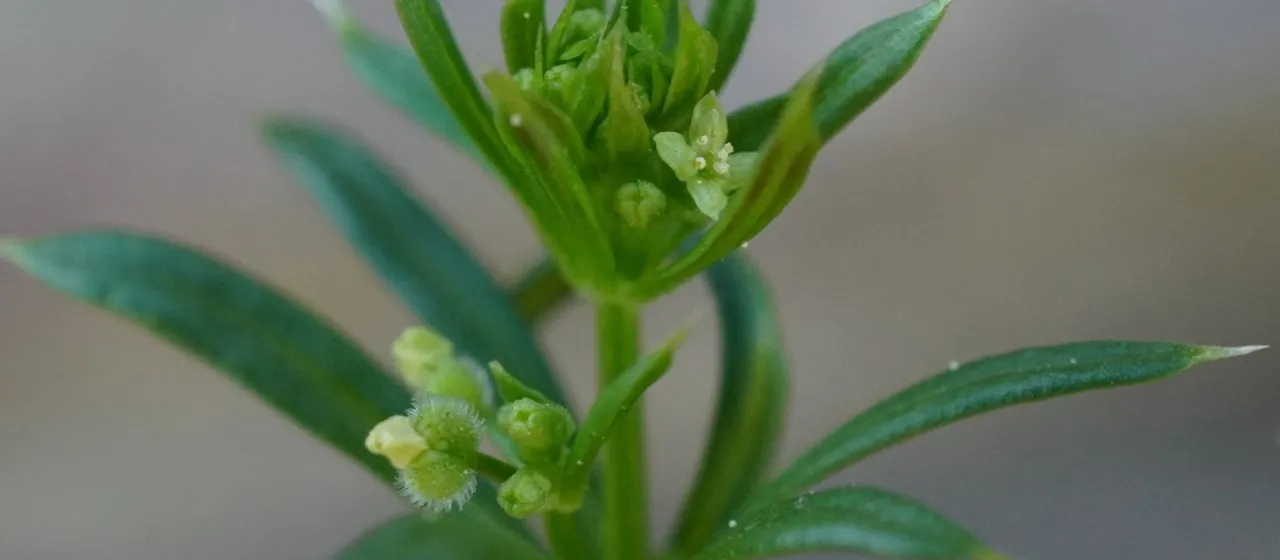
Botanically, false cleavers are characterized by a scrambling or climbing four-angled stem that can reach lengths of up to 100 centimeters. The stem and leaf margins are equipped with small, hooked bristles, which act as anchors for climbing. The leaves grow in whorls, and the plant produces inconspicuous greenish-yellow flowers. The seeds are round and rough, making them easily dispersed by harvesting machinery, water, and wildlife.
Effective management requires an integrated approach. Cultural practices such as crop rotation, competitive sowing densities, and proper tillage are essential for minimizing the infestation of this weed. Early detection and chemical intervention during the vegetative stage are critical to preventing the plant from producing seeds, as the seed bank can persist in the soil for several years.
The economic impact of false cleavers is substantial. Besides direct yield losses caused by nutrient competition, the weed causes severe lodging in cereal crops, complicating the harvesting process and increasing mechanical stress on combines. Contamination with false cleavers seeds often requires additional cleaning and drying stages, which adds significant costs to the processing of agricultural raw materials.