Creeping fig
Ficus pumila L.
Description
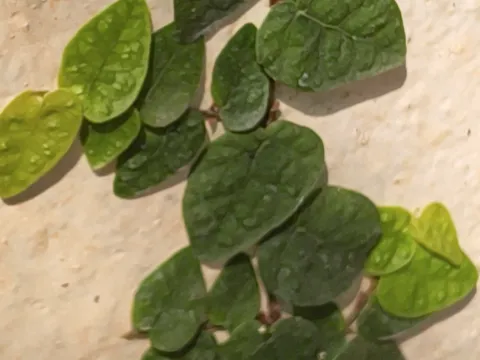
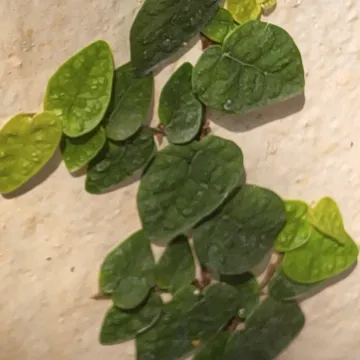
Creeping fig (Ficus pumila L.) is a woody evergreen vine belonging to the Moraceae family. Unlike typical Ficus species, this plant is characterized by its vining habit and the presence of adventitious rootlets, which allow it to attach firmly to various vertical surfaces. It is widely grown as an ornamental cultivar valued for its fast-growing foliage and ability to cover expansive areas.
The plant originates from East Asia, specifically regions within China, Japan, and Vietnam. In its native habitat, it thrives in humid subtropical conditions, climbing over rocks and trees. Currently, it is cultivated worldwide in greenhouses and specialized nurseries, where it is optimized for high humidity and indirect light conditions, which are critical for its vegetative development.
Botanically, the species exhibits heterophylly. The juvenile form features tiny, heart-shaped leaves that cling closely to the substrate, creating a carpet-like effect. As the plant matures and produces reproductive stems, the leaves become larger, thicker, and more coriaceous. Understanding this life cycle is essential for agronomists managing the plant for architectural or display purposes.
Agronomic requirements for Creeping fig include a well-draining, nutrient-rich, slightly acidic potting medium. Proper moisture management is the most critical factor; the substrate must remain consistently moist but never waterlogged to prevent root health issues. Optimal growth occurs in temperatures between 18°C and 26°C with high ambient humidity, which helps maintain the plant's structural integrity and aesthetic appearance.
- Requires consistent soil moisture to prevent leaf drop.
- Avoid direct sunlight to prevent leaf scorching.
- Regular pruning is necessary to control its vigorous growth habit.
- Susceptible to spider mites, scale insects, and mealybugs.
- Root rot is the primary disease caused by over-irrigation.
The primary economic use of Creeping fig is in the ornamental and landscaping industry, particularly for interior vertical greening and facade coverage in warm climates. Plant protection programs emphasize integrated pest management (IPM) to control common pests like spider mites. Disease prevention focuses on maintaining sanitation and strictly controlling the hydration levels of the root zone to avoid the onset of pathogenic fungi.
Photo gallery