Dotted fig
Ficus punctata Thunb.
Description
Ficus punctata Thunb., commonly known as the dotted fig, belongs to the diverse Moraceae family. This species is predominantly characterized by its growth habit as a woody climber or epiphyte, capable of establishing itself on forest trees in its native habitat within the tropical regions of Southeast Asia.
The geographic origin and distribution of the dotted fig are centered in countries such as Indonesia, Malaysia, and the Philippines. Because of its tropical nature, the plant is highly sensitive to cold temperatures, requiring a stable, warm, and humid environment to thrive in cultivation.
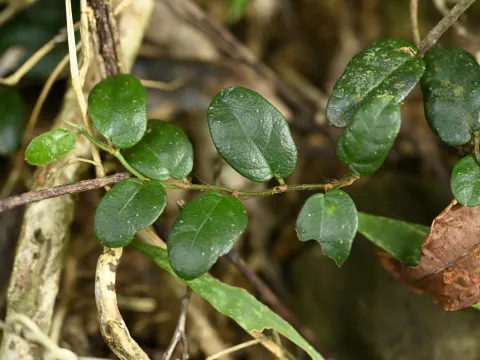
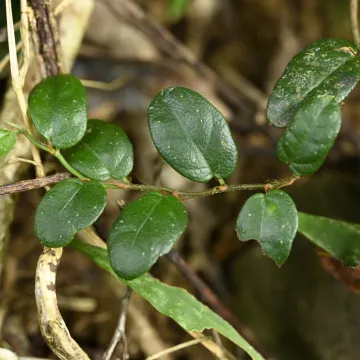
Botanically, Ficus punctata is distinguished by its leathery, elliptical leaves that feature small dots on the underside, providing a distinct identification mark. The plant produces unique syconia—fleshy, fruit-like structures that emerge directly from the woody stems, playing a crucial role in supporting local bird populations in the wild.
Regarding agronomic requirements, the species favors well-draining, nutrient-rich substrates that mimic the floor of a tropical rainforest. Irrigation must be managed carefully to maintain constant soil moisture without causing root rot, as the plant is highly intolerant to waterlogging during dormant or cooler periods.
In terms of practical use, the plant is primarily cultivated for ornamental purposes in botanical gardens and conservatories, where its climbing habit is utilized for vertical landscaping. Like other species of the genus, it can be susceptible to common pests such as scale insects and spider mites, and its health is largely dependent on strict hygiene and proper air circulation.
Photo gallery