Sacred fig
Ficus religiosa L.
Description
The Sacred fig (Ficus religiosa L.) is a large, long-lived deciduous or semi-evergreen tree belonging to the Moraceae family. Known globally as the Bodhi tree, this plant holds significant religious and cultural importance in many Eastern traditions. Its biological architecture, featuring broad leaves and a robust trunk, makes it a prominent species in its native tropical environments.
Originating from the Indian subcontinent, Nepal, and Southwest China, the Sacred fig thrives in regions with tropical climates. While it is not a traditional food crop, it plays a vital role in tropical landscape management and agroforestry. The species is highly adaptable, though it requires specific temperature conditions to reach its full growth potential and maturity.
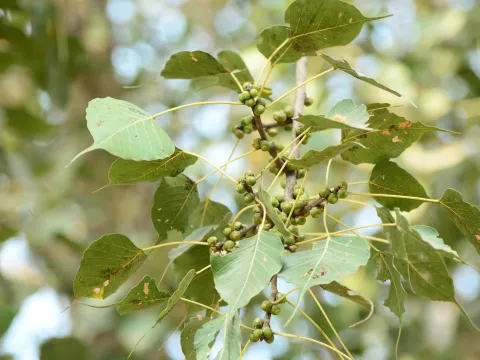
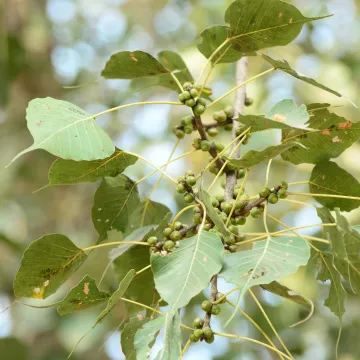
Botanically, the plant is characterized by its cordate leaves with a distinctive long drip tip, which assists in shedding excess rainwater. The tree produces small, spherical fruits known as syconia, which turn from green to purple upon ripening. Unlike many other fig species, Ficus religiosa does not grow as a hemi-epiphyte in all conditions, but it can be quite invasive if planted near structural foundations.
Agrotechnical requirements for the Sacred fig include full sun exposure and well-draining, nutrient-rich soil. In terms of maintenance, it requires consistent moisture and protection from frost, as the species is highly sensitive to cold temperatures. Pruning is often necessary to control the size of the canopy, especially when grown as an ornamental tree in urban areas.
The economic and utility potential of the Sacred fig is diverse, spanning several sectors:
- Medicinal use: Extracts from the leaves and bark are used in various traditional health practices.
- Ornamental use: Highly valued for landscaping and shade in tropical and subtropical regions.
- Fodder: Leaves are utilized as a supplemental feed source for livestock.
- Environmental: Acts as a host plant for various insects and supports local biodiversity in forest ecosystems.
Common pests associated with this crop include mealybugs, scale insects, and spider mites, which can cause significant defoliation if left untreated. Disease management focuses on preventing root rot through careful irrigation practices and ensuring adequate soil aeration. Regular monitoring for fungal leaf spots is also recommended to maintain the overall health and vitality of the tree.
Photo gallery