
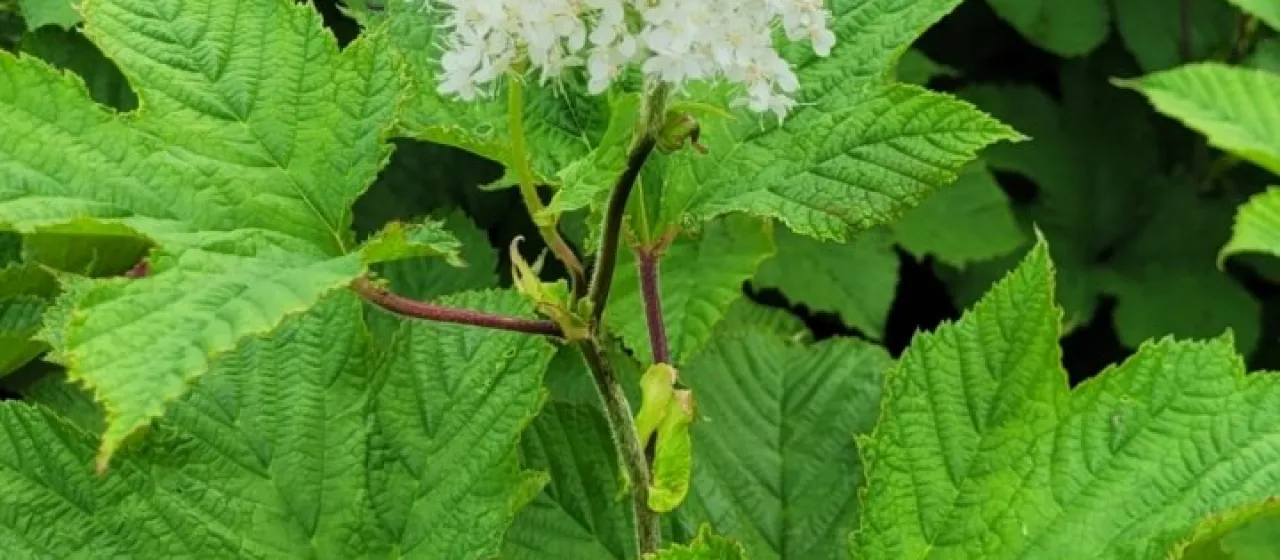
Description
Kamchatka meadowsweet (Filipendula kamtschatica) is a robust perennial herb belonging to the Rosaceae family. Known for its impressive size and rapid growth, it has gained attention as a high-potential fodder crop capable of producing substantial amounts of biomass under optimal moisture conditions.
Originating from the Far East, including the Kamchatka Peninsula and surrounding islands, the plant is naturally adapted to cool, moist environments. In an agricultural context, it thrives best in floodplains or areas with consistent water availability, showing strong resilience to northern climatic fluctuations.
Botanically, this species is characterized by its massive rhizomes and tall, sturdy stems that can grow up to three meters in height. The foliage is thick and broad, contributing to its high photosynthetic capacity, while the white to cream-colored flower clusters add significant ornamental value and serve as a vital nectar source.
To ensure high yields, farmers should focus on nutrient-rich, moist loam soils. While the plant is relatively low-maintenance once established, adequate soil preparation and periodic organic fertilization are essential for maximizing plant density and structural integrity throughout the growing season.
The primary agricultural use of this plant lies in forage production, where it can be harvested for silage. Beyond agriculture, it is valued in the pharmaceutical industry due to the presence of secondary metabolites, and it is increasingly recognized for its role in sustainable land management and biodiversity support.
- Excellent biomass production in cool, damp climates.
- Long-lived perennial structure requiring little reseeding.
- High protein content if harvested at the correct physiological stage.
- Significant resistance to common crop pathogens and pests.