
Description
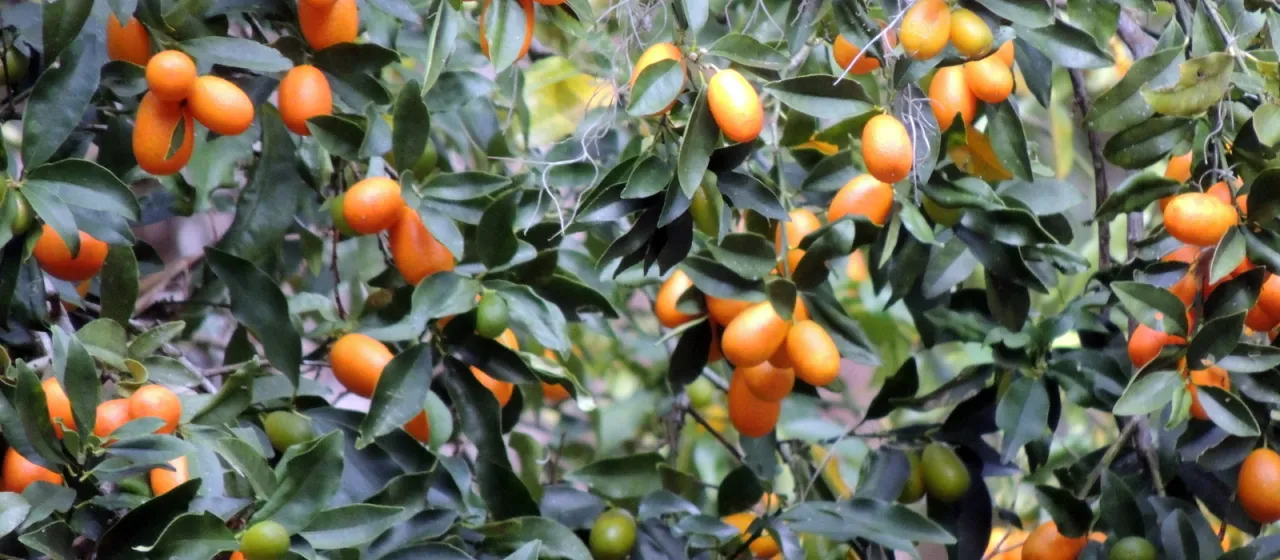
The Nagami kumquat (Fortunella margarita) is a small evergreen citrus tree belonging to the family Rutaceae. It is highly valued for its ornamental value and its edible, bright orange fruit. Unlike most citrus species, the entire fruit is edible, with a sweet peel that contrasts perfectly with the tart and acidic pulp inside.
Native to South China, this species has been naturalized in many subtropical regions of the world, including Japan, the Mediterranean, and the United States. Its adaptability to a wider range of climates compared to other citrus plants has made it a favorite for both home gardeners and commercial fruit growers, particularly in mild-winter zones.
Botanically, the plant is a slow-growing tree or shrub that typically reaches heights of 2 to 4 meters when planted in the ground. Its leaves are small, narrow, and dark green with a glossy texture. The tree produces fragrant, small white flowers that often appear in clusters, contributing to its aesthetic appeal in landscape architecture.
Cultivation requires specific environmental conditions to thrive. The plant prefers well-drained, slightly acidic, and nutrient-rich soil. It is essential to provide full sunlight exposure for several hours a day to ensure fruit production. Irrigation should be consistent, ensuring the soil remains moist but never waterlogged to prevent root rot, which is a common issue for container-grown specimens.
In terms of хозяйственное использование (economic use), the Nagami kumquat is widely utilized in the food industry for marmalades, jellies, candies, and as a fresh garnish in culinary arts. It is also highly regarded as a medicinal plant due to its high concentration of vitamin C and essential oils. Common pests include aphids, scale insects, and spider mites, while disease management focuses on preventing root fungi and foliage blight through proper pruning and air circulation.