
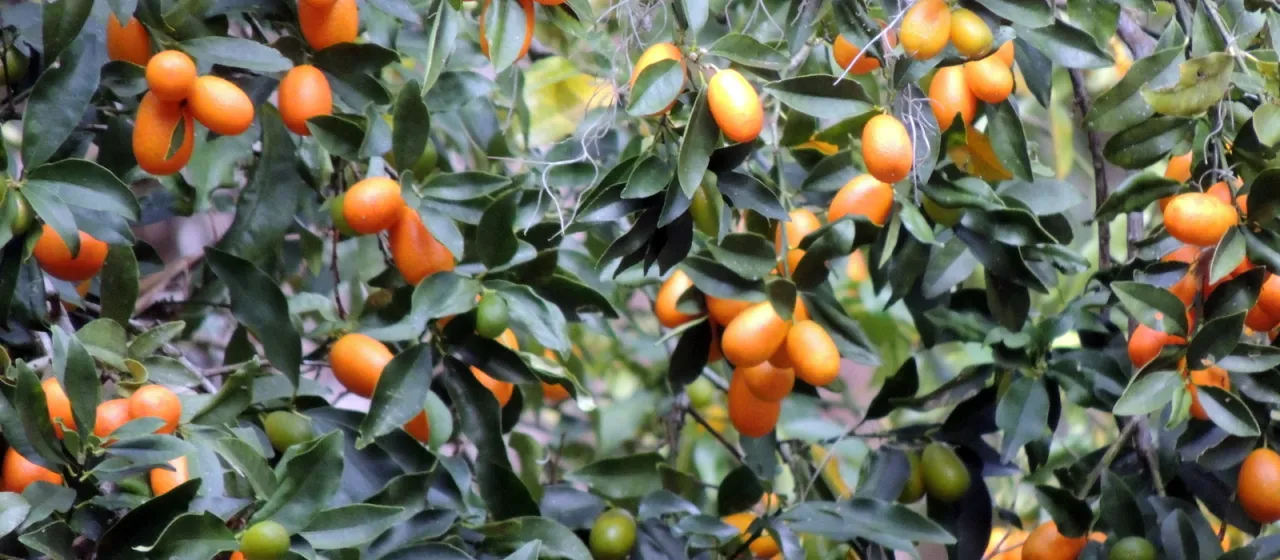
Description
The round kumquat (Fortunella japonica) is an evergreen tree species belonging to the Rutaceae family. Known for its small, edible, orange-colored fruit, this plant is a notable member of the citrus family that exhibits slower growth rates compared to standard orange or lemon trees, making it ideal for container gardening and ornamental landscapes.
Originating from Southeast Asia, specifically Southern China, the round kumquat has spread globally to subtropical regions including Japan, the United States, and Mediterranean countries. It thrives in warm, humid environments where temperature fluctuations are minimal, reflecting its adaptation to typical subtropical climatic zones.
Botanically, the plant is characterized by its glossy, dark green, lanceolate leaves and white, fragrant blossoms. The fruits are spherical, typically ripening in winter. A distinct feature of this species is its peel, which is sweet and flavorful, contrasting with the tart, acidic pulp inside, which allows for the consumption of the fruit in its entirety.
Agricultural success with Fortunella japonica depends on well-draining, nutrient-rich soil with a slightly acidic pH. The crop requires consistent irrigation to maintain soil moisture without inducing waterlogging, which can lead to fungal issues. Regular pruning helps maintain the desired shape and stimulates the production of new fruiting wood in the following season.
Economically, the round kumquat is a high-value specialty crop. It is widely used in the culinary industry for marmalades, candied peels, and gourmet desserts. Beyond its food value, the tree is frequently utilized in professional landscaping for its dense, vibrant foliage and long-lasting winter fruit display.
- Scale insects
- Spider mites
- Citrus aphids
- Anthracnose
- Root rot